
Key Takeaways
1. In Indiana, non-medical home care typically costs $30–$35 per hour, close to the national median.
2. A few hours of weekly help can run around $1,000/month, while daily support (30–40 hrs/week) lands closer to $4,200–$5,600/month; 24/7 care is often $15,000+/month.
3. Cost depends on four things: how much care is needed, the type of support, the schedule, and the provider you choose.
4. Medicare generally does not cover non-medical custodial care (bathing, meals, companionship); it only covers certain skilled home health services under specific conditions.
5. Most families fund non-medical home care through private pay, though some may qualify for Medicaid or Indiana's home- and community-based services programs.
6. The best approach isn't buying the most hours, it's starting with the level of support that solves today's problem, then adjusting as needs change.
Introduction
The decision to bring care into the home often comes with many questions; and cost is usually one of the biggest.
Families want to understand what they are committing to, what level of care their loved one may need, and how to plan responsibly for the future. Having a clear picture of home care costs can help you make decisions with confidence instead of waiting until circumstances become urgent.
In Indiana, home care costs can vary depending on the type of support your loved one needs, how often care is provided, and the provider you choose. A few hours of weekly companionship will look very different from a care plan that includes daily assistance with personal care, mobility, or other routines.
At Evelyn Wells, we know that every family’s situation is different. The right care plan is not about choosing the most hours or the least expensive option. It is about finding meaningful support that helps your loved one continue living safely, comfortably, and independently at home.
In this guide, we’ll walk through what affects home care costs in Indiana, typical pricing ranges, and what families should consider when planning for senior care at home.
What Is the Average Cost of Home Care in Indiana?
There is no single price for home care because every care situation is different. The amount a family pays depends on the type of support needed, how often care is provided, and the level of assistance required.
For most non-medical home care services, families typically pay an hourly rate. According to the CareScout Cost of Care Survey, the national median cost for in-home care is around $35 per hour. In Indiana, families can generally expect home care rates to fall within a similar range, often in the low-to-mid $30s per hour, depending on the provider, location, and services included.
These figures are meant to provide a general starting point for planning. The actual cost of care for your loved one may be different based on their specific needs and the type of care schedule created.
For example:
- A senior who needs a few hours of weekly companionship may have a smaller monthly investment than someone who needs daily assistance with personal care.
- A family looking for help with meals, errands, and household routines may need a different level of support than someone needing mobility assistance or hands-on care.
- A care plan designed around overnight support or extended hours will naturally involve a larger commitment.
Rather than focusing only on the hourly rate, families should consider what that support provides: more safety at home, greater independence for their loved one, and peace of mind for everyone involved.
What Should Families Expect to Spend Each Month?
Looking at care by the hour can make it difficult to understand the bigger picture. Many families find it more helpful to estimate the monthly cost based on the number of hours of support their loved one may need.
Below are general examples using an estimated hourly rate of $35 per hour:
|
Care Schedule |
Estimated Monthly Cost |
|---|---|
|
7 hours per week |
About $1,000/month |
|
15 hours per week |
About $2,100/month |
|
30 hours per week |
About $4,200/month |
|
40 hours per week |
About $5,600/month |
|
24/7 care |
Often $15,000+/month |
These estimates are for planning purposes only. Actual costs may vary depending on the provider, location, care needs, schedule, and services included.
A few hours of care each week may be enough for a senior who is mostly independent but needs occasional assistance. Others may need a more consistent schedule to help with daily routines, safety, and family caregiver support.
Many families also begin with a smaller care plan and adjust over time as needs change. Starting with the right amount of support today can help prevent families from waiting until a situation becomes overwhelming.
What Factors Affect the Cost of Home Care?
No two families have the exact same care needs, which is why home care costs can look different from one household to another.
A senior who needs occasional companionship may have a very different care plan than someone who needs daily assistance with personal care or mobility. Understanding what influences pricing can help families make sense of their options and plan more confidently.
1. The Amount of Care Needed
The number of hours a caregiver spends with your loved one is one of the biggest factors affecting overall cost.
Some seniors may only need support a few hours each week for things like:
- Companionship and social connection
- Meal preparation
- Light housekeeping
- Running errands
Others may need more frequent assistance throughout the day with activities such as:
- Bathing and grooming
- Dressing
- Mobility support
- Daily routines and personal care
A care plan can often change over time as a senior’s needs evolve, which is why many families choose to start with the level of support needed today and adjust when necessary.
2. The Type of Care and Support Provided
Home care is not one single service. The type of assistance your loved one needs can influence the amount of planning, caregiver experience, and support required.
For example, companionship-focused care may look very different from a plan that includes hands-on assistance with personal care or more complex daily routines.
At Evelyn Wells, we take time to understand what matters most to each family before creating a care plan. Our approach focuses on matching support with the individual — their routines, preferences, and goals for remaining independent at home.
Learn more about our approach to personalized senior home care services
3. The Care Schedule
The timing and frequency of care also impact the overall investment.
A few hours of weekly support will naturally cost less than a schedule involving multiple visits throughout the week or extended daily care.
Families may choose different schedules depending on their situation, such as:
- Morning assistance to help start the day safely
- Afternoon companionship and activities
- Support while family caregivers are working
- Regular visits to provide consistency and peace of mind
The best schedule is not always the one with the most hours. It is the one that provides the right support at the moments when it makes the greatest difference.
4. The Home Care Provider You Choose
Families sometimes compare home care providers based only on hourly rates, but the cost of care represents more than caregiver time alone.
When working with a professional home care agency, families are also receiving support such as:
- Caregiver screening and hiring
- Training and supervision
- Care coordination
- Scheduling support
- Backup options when a caregiver is unavailable
- Communication with the family
These services help create consistency and reliability — two things that become especially important when someone you love is depending on care.
Choosing home care is not only about finding someone to provide assistance. It is about finding a trusted partner who can support your family through each stage of the journey.

Older couple reviewing home care expenses together at their dining table.
How Much Home Care Does a Senior Usually Need?
One of the most common questions families have when exploring home care is:
“How many hours of care will my loved one actually need?”
The answer depends on the person.
Some seniors may only need occasional support to stay on top of household tasks and maintain social connection. Others may need more consistent assistance because daily activities have become more challenging.
The right amount of care depends on factors such as your loved one’s health, routines, safety concerns, and the level of support already available from family members.
A Few Common Home Care Schedules
While every care plan is unique, many families begin with one of these general levels of support:
Occasional Support (A Few Hours Per Week)
This level of care may work well for seniors who are largely independent but could benefit from extra help with everyday tasks.
Examples may include:
- Preparing meals
- Light housekeeping
- Running errands
- Companionship and conversation
- Transportation to appointments
For some families, a few hours each week provides reassurance that their loved one has regular support while maintaining their independence.
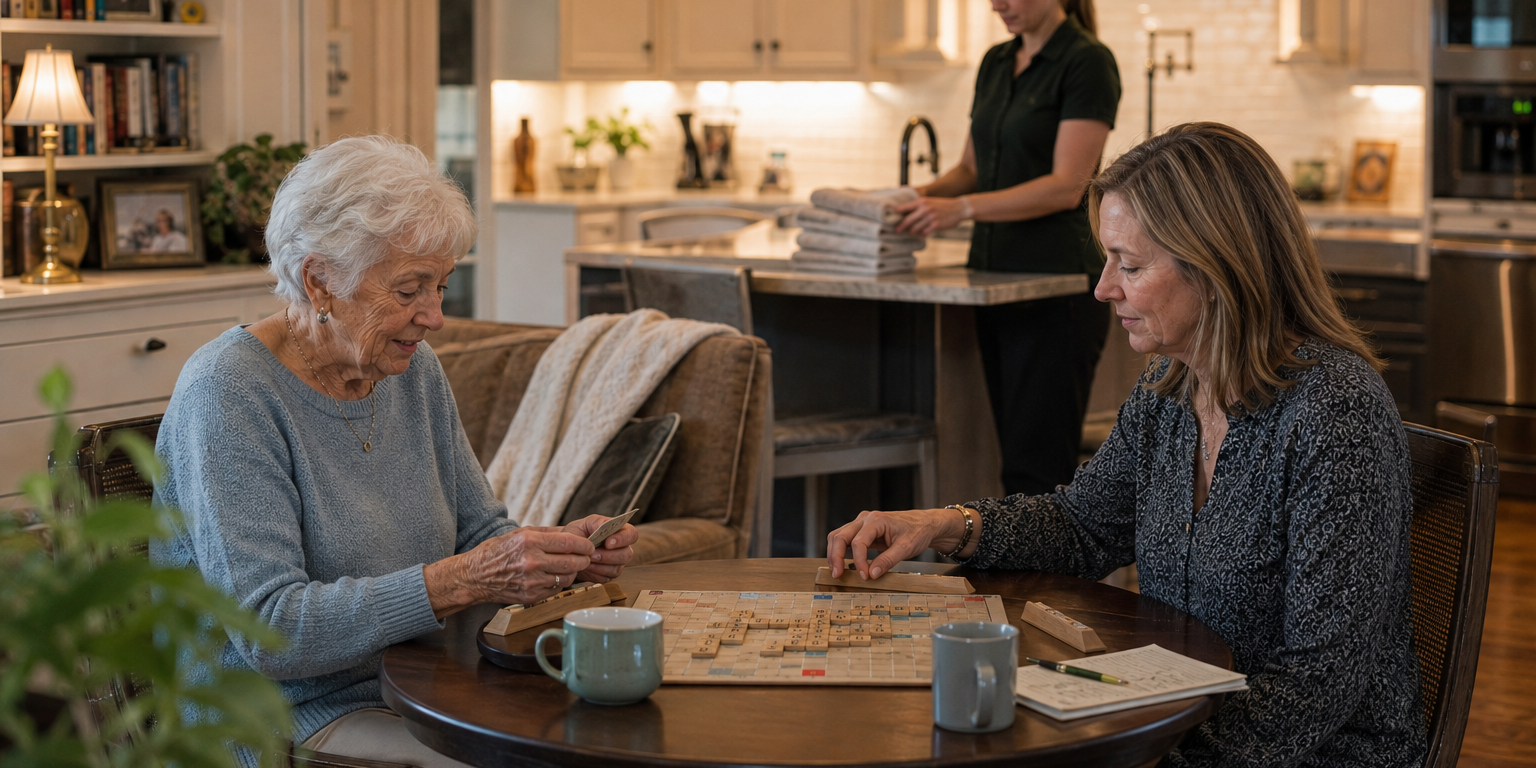
Older woman plays a word game with her daughter while a home caregiver folds towels nearby.
Regular Weekly Support (Several Hours Throughout the Week)
As needs increase, families may choose a more consistent schedule.
This may include support with:
- Morning or evening routines
- Personal care assistance
- Meal preparation
- Mobility support
- Medication reminders
Regular visits can also provide valuable relief for family caregivers who are balancing work, personal responsibilities, and caregiving.
More Comprehensive Daily Support
Some seniors need assistance throughout the day to remain safely at home.
This may be appropriate when someone needs help with multiple daily activities or when family members are no longer able to provide all the support required.
A more involved care plan may include:
- Multiple caregiver visits
- Assistance with personal routines
- Mobility and safety support
- Ongoing companionship
- More structured daily care
Finding the Right Amount of Care
Determining the right number of hours is not always easy. Many families worry about either arranging too little support or committing to more care than their loved one currently needs.
A good place to start is by looking at what has changed.
Ask yourself:
- Are daily tasks becoming more difficult?
- Is your loved one skipping meals, appointments, or activities they enjoy?
- Are family caregivers feeling overwhelmed?
- Are there safety concerns at home?
- Would additional support help your loved one remain independent longer?
At Evelyn Wells, we help families understand their options and create a care plan based on their loved one’s specific situation. Our 5-step approach to care focuses on understanding each person’s needs, preferences, and goals before recommending the right level of support.
The goal is not simply to provide more hours of care. It is to provide the right care at the right time.
Private Pay vs. Medicare, Medicaid, and Insurance
One of the most common questions families ask when exploring home care is:
“Will Medicare or insurance pay for this?”
The answer depends on the type of care your loved one needs.
It is important to understand that home care and home health care are not the same thing.
Home health care generally refers to medical services provided in the home, such as skilled nursing or therapy, when someone meets specific Medicare requirements. Medicare may cover certain home health services, but it does not generally pay for ongoing custodial care when the primary need is help with everyday activities like bathing, dressing, meals, or companionship.
Private pay is often used for the type of non-medical home care that helps seniors maintain independence and continue living safely at home.
This may include:
- Assistance with daily routines
- Personal care
- Companionship
- Meal preparation
- Mobility support
- Transportation
- Respite support for family caregivers
Can Insurance or Government Programs Help Pay for Home Care?
Many families assume Medicare, insurance, or government programs will cover all types of home care. However, coverage depends on the type of care needed and the program requirements.
For families exploring non-medical home care, private pay is often one of the most common options because services like companionship, personal care, meal preparation, and help with daily routines are not typically covered by Medicare.
Medicare may cover certain home health care services, such as skilled nursing or therapy, when specific requirements are met. However, it generally does not pay for ongoing personal care assistance when that is the only service needed.
Some families may also qualify for assistance through programs such as Medicaid or Indiana’s home- and community-based services programs, depending on eligibility.

Check out our guide on How to pay for Home Care: Private Pay Explained It walks through common payment options and what families should consider when planning for care.
The most important step is understanding what type of support your loved one needs first. Once you know the care required, you can explore which payment options may be available.
Planning for Home Care Costs
The cost of home care can feel overwhelming when viewed as one large number. Many families find it easier to begin by asking a different question:
“What support would make the biggest difference right now?”
For some seniors, that may mean a few hours of weekly assistance to help with meals, errands, or companionship. For others, it may mean more consistent support with daily activities and personal care.
Starting with the right level of care allows families to create a plan that is both meaningful and sustainable.
At Evelyn Wells, we help families understand their options and build care plans around their loved one’s needs, routines, and goals. Our senior home care services are designed to provide personalized support that helps seniors remain comfortable and independent at home.

Older couple reviewing home care costs with a care professional at a table.
Finding the Right Home Care Plan for Your Family
Understanding the cost of home care is an important first step, but the right care decision comes down to finding support that fits your loved one’s needs and your family’s situation.
Every senior has a different level of independence, different routines, and different goals for aging at home. A thoughtful care plan should provide the right amount of support while preserving the comfort, dignity, and independence your loved one values.
Click the link to explore what care may look like for your loved one, come with questions to a free consultation with our team.
At Evelyn Wells, we help Indianapolis families navigate the process of finding compassionate, personalized home care. From understanding your options to creating a care plan that fits your loved one’s needs, our team is here to provide guidance every step of the way.
Non Medical Disclaimer
The information provided in this article is for educational purposes only and is not intended as a substitute for professional medical advice, diagnosis, or treatment. Always seek the advice of your physician or other qualified health provider with any questions you may have regarding a medical condition. Never disregard professional medical advice or delay in seeking it because of something you have read in this article.
Related Posts

How to Find Home Care for an Aging Parent: A Quick Guide
Learn how to find home care for an aging parent, from understanding their needs and searching online and local resources to creating a shortlist and evaluating potential providers.

Affordable Home Care Services for Seniors in Indianapolis: A Resource Guide for 24/7 Care Needs
For most families, the question isn't whether their loved one needs help at home. It's whether they can afford it. That worry is common, and it's valid; home care is a real investment, especially…

How to Pay for Home Care: Private Pay Explained
Private pay means paying directly for home care services using personal financial resources rather than relying on Medicare, Medicaid, or another insurance benefit. For non-medical home care, private…