
TL;DR - Key Takeaways
1.Match the Level: Use our matrix to decide between Companion, HHA, or CNA care based on behavior.
2. Eye-Level Empathy: Watch how candidates approach your loved one; eye level is a must to avoid paranoia.
3. The 10-Second Rule: A good specialist waits for the brain to process; no rushing the conversation.
4. Stealth Intro: Start the new hire as a “housekeeper” to protect your loved one’s pride and build trust.
The Direct Guide: Hiring a Caregiver for Dementia
Hiring a caregiver for someone with dementia goes beyond finding basic help. You are looking for a partner who can navigate a world that is often confusing and unpredictable for your loved one. This guide gives you the exact roadmap to find a professional who doesn’t just watch the person but actually improves their daily life.

1.The Decision Matrix: What Level of Care Do You Need?
It is important to know that dementia is not a one-size-fits-all diagnosis. To avoid overpaying for care or being under-supported during a crisis, use this matrix to determine your hiring target for hiring a caregiver for dementia.
| Patient Behavior | Recommended Care Level | Typical Schedule | Why This Level? |
| Forgets keys; still cooks safely; socially active. | Companion Care | 10–20 hrs/week | Focuses on mental engagement and preventing isolation. |
| Forgets to eat; hygiene is slipping; “Sundowning” starts. | Home Health Aide (HHA) | 20–40 hrs/week | Handles “Personal Care” (bathing/dressing) and meal prep. |
| Frequent wandering; aggression; needs help lifting. | Certified Nursing Assistant (CNA) | Full-time or 24/7 | Specialized in safety, mobility, and high-intensity behaviors. |
Unsure if it’s time? Read our guide on the [7 Signs Your Loved One Needs Professional Memory Care].
2. Spotting the "Invisible Red Flags"
A resume can be polished, but a caregiver’s instincts cannot be faked. When you meet a candidate for hiring a caregiver for dementia, ignore the paper and watch these three interactions:
A. The Approach: Do they walk up to your loved one and speak at eye level? Standing over a dementia patient is intimidating and can trigger immediate paranoia.
B. The “Wait Time”: When they ask a question, do they wait at least 10 seconds for a reply? Expert caregivers know that dementia brains process language slower.
C. The Reality Check: If your loved one says something untrue (e.g., “I just had lunch” when they haven’t), does the caregiver argue? You want someone who “leans into the reality” rather than correcting them.

3. The "Stealth" Introduction: The First 48 Hours
The biggest hurdle is often the patient’s pride. When hiring a caregiver for dementia, if you introduce a stranger as a “caregiver,” your loved one might feel insulted.
A. The Artist’s Hack: Introduce the new hire as a “Housekeeping Assistant” or a “Friend from the church group who’s helping me out.”
Day 1: The caregiver should focus on chores and stay in the background.
Day 2: They should engage in a shared hobby (puzzles, music, gardening).
Day 3: Transition to direct care (medication, bathing) once a social bond is formed.

4. Direct Home Safety Hacks
A great hire manages the house to support the patient. Ensure your caregiver understands these simple tricks during the process:
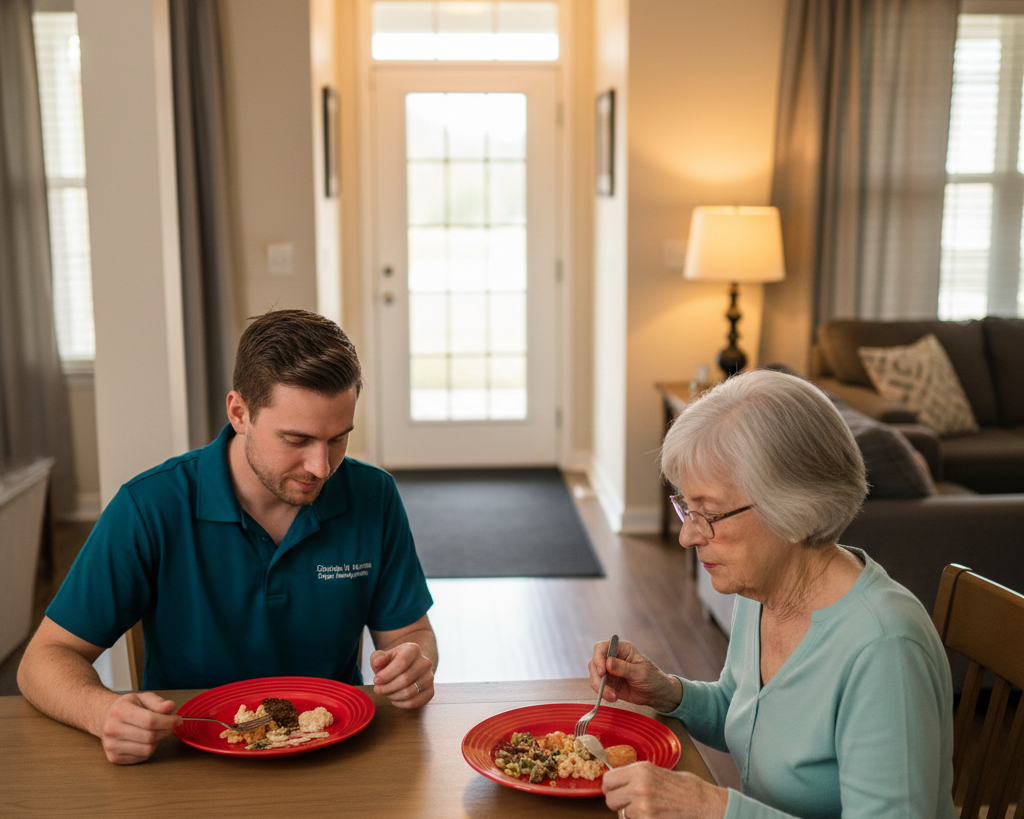
A. High-Contrast Dining: Use bright red plates. Research shows dementia patients eat 25% more when food contrasts with the plate color.
B. The Black Mat Trick: Place a dark rug in front of exits. To many dementia patients, the dark patch looks like a hole, naturally discouraging them from wandering out.
C. Sensory Safety: We use a “Sensory Audit” (much like our [TBI Home Care] protocol) to ensure the lighting and noise levels don’t trigger confusion.
5. Final Step: Let’s Build Your Strategy
The difference between a “sitter” and a “specialist” is the questions you ask. Most families realize they hired the wrong person only after a crisis happens. If you’re feeling overwhelmed, you aren’t alone. You can send us further questions you have by clicking HERE or schedule a free call with us HERE.
Non Medical Disclaimer
The information provided in this article is for educational purposes only and is not intended as a substitute for professional medical advice, diagnosis, or treatment. Always seek the advice of your physician or other qualified health provider with any questions you may have regarding a medical condition. Never disregard professional medical advice or delay in seeking it because of something you have read in this article.
Related Posts

7 Signs It’s Time for Professional Memory Care: A Detailed Guide
Is it aging or something more? When early onset dementia symptoms or safety issues at home begin to outweigh your ability to provide care, it may be time for professional intervention. This guide…

Home Care for Patients with Traumatic Brain Injury
TBI homecare isn’t about fixing the patient; it’s about making the home a quiet, safe space where the brain can rest and heal. For someone with a brain injury, normal things like a humming fridge,…