
Key Takeaways
-
Dolly Parton and Carl Dean’s story highlights important lessons in caring for the caregiver.
-
Family caregiving can affect the caregiver’s well-being, physical health and daily routines.
-
Caregivers can ask for help without giving up their deeply meaningful caregiving role.
-
Respite care gives family caregivers time for appointments, rest, errands, and recovery.
-
Prioritizing caregiver well-being can help make long-term caregiving more sustainable.
Dolly Parton spent almost sixty years being exactly who she said she was. No persona to maintain, no distance from her fans; just rhinestones, a guitar, and a way of making people feel like they mattered. She kept showing up for her music, her work, Dollywood and the people she loved, long after she had anything left to prove. That’s the Dolly most of us are grieving.
But, there’s another part of her story worth sitting with too.
Part of that story was a marriage most of the world never got to see. Dolly married Carl Dean in 1966 and stayed married to him for nearly sixty years, through a fame he largely stayed outside of, and a life he mostly watched from just outside the spotlight. In the years before his death in March 2025, Dolly spoke about watching over him while continuing to carry the demands of her own life and career.
She kept working. She kept showing up, the way she always had.
Then, near the end of her own life, she said something that made that strength look a little different. On August 21, 2026, barely four days before she passed, she told People magazine, “I am dealing with some health issues that I just didn’t pay attention to when I was watching over Carl.”
She didn’t say it like a warning or a confession. She said it the way you’d mention something to an old friend over coffee, almost like an afterthought.
But if you’ve ever spent a season of your life showing up for someone else while your own doctor’s appointments quietly slipped further and further down the list, you already understand exactly what she meant, in a way that doesn’t need much explaining.

When Caring for Someone Else Leaves Little Room for You
When you’re caring for someone you love, your own health has a way of becoming negotiable. Not because you’ve decided it matters less, but because there is rarely a moment that feels like the right one to put yourself first.
Dolly’s story doesn’t tell us that caregiving caused her health problems. It tells us something more familiar: when you’re focused on someone else’s needs, your own can become easier to put off.
In the US today, 63 million Americans are caregivers. One in every four adults cares for someone with a disability, chronic disease, or serious illness. The demand for family caregiving has grown by nearly 50% in the past ten years. Two-thirds are age 50 or older and many of those caregivers are navigating increasingly complex responsibilities with 40% providing high-intensity care.
But statistics don’t always tell the full story of what caregiving feels like day to day.
Their appointment is today, so yours can wait until next month. Their prescriptions need refilling, so yours can sit in the pharmacy bag a while longer. You’re tired, but they need dinner. You haven’t slept well in weeks, but there’s always one more thing that needs to be done.
Little by little, your own needs become the ones that can wait.
And the data shows just how common this is. New research from AARP and the National Alliance for Caregiving found that nearly one in four family caregivers have difficulty taking care of their own health while focusing on the needs of the person they’re caring for. Nearly two-thirds report moderate or high emotional stress, while 45% report moderate or high physical strain. One in four caregivers also report being in poor health themselves, often while facing disruptions or limited access to supportive benefits.
Research on spousal caregivers has pointed to some of the same pressures for decades. A 1997 study of older spousal caregivers found that those providing higher levels of care were more likely than noncaregivers to report not getting enough rest, having less time to exercise or recover from illness, and forgetting to take their prescription medications.
The findings don’t prove that caregiving causes poor health, and other research has found mixed results when it comes to preventive medical care. But they do point to something important:
When caregiving demands become intensive, the ordinary routines that help us look after ourselves can become harder to protect.
So you keep going.
One postponed checkup becomes two. One missed night of sleep becomes a pattern. You put off exercise, eat whatever is easiest, cancel plans, ignore the ache you’ve been meaning to get checked, and tell yourself you’ll get back to your own life when things calm down.
Except “once things settle down” stops being a plan and starts becoming a habit.
That doesn’t mean you’re neglecting yourself on purpose. It means love, responsibility, and exhaustion can exist in the same place for a very long time. You can be deeply committed to caring for someone else and still slowly lose touch with what you need.
And sometimes, the caregiver doesn’t realize how much they’ve given up until they finally have a moment to step back and notice.
Asking for Help Doesn’t Mean You’ve Stopped Caring
There can be a strange guilt that comes with needing help when you’re caring for your spouse. You may feel like you should be able to handle it yourself, especially after years of building a life together.
But caregiving is a substantial responsibility. On average, family caregivers spend about 27 hours each week providing care. At Evelyn Wells, we see how much those hours can ask of a person. And despite the demands, more than half say caregiving gives them a sense of purpose and meaning.
The two can be true at the same time: caring for someone you love can be deeply meaningful and still be more than one person can reasonably carry alone.
Asking someone else to step in can feel, at first, like you’re handing over a responsibility that’s both meaningful and that belongs to you. But getting help doesn’t mean caring less. Sometimes, it is what makes it possible to keep caring well.
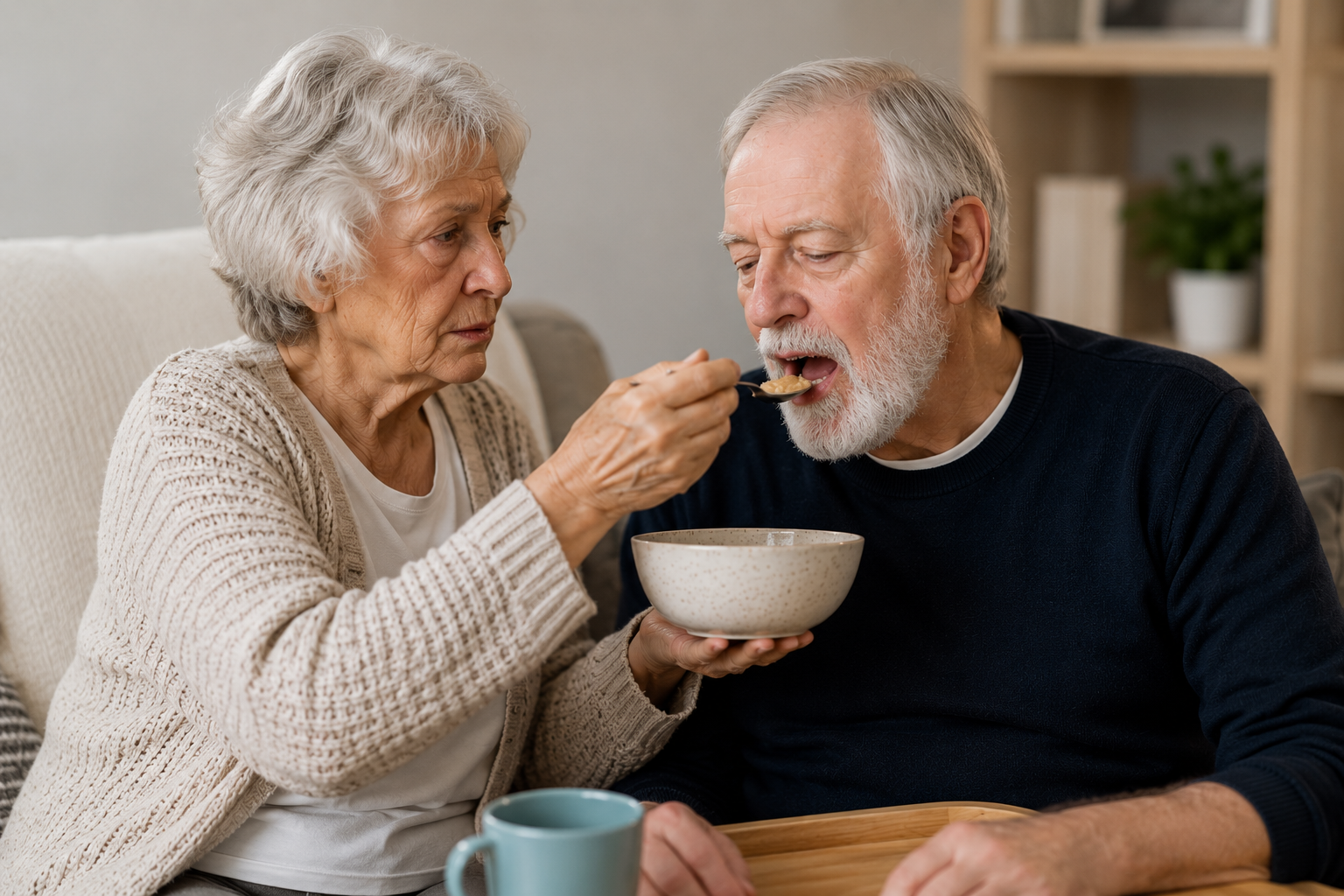
If you’re feeling overwhelmed…
Read This Next: What to Do When Your Elderly Parent Refuses Help
Practical ways to start the conversation when your loved one isn’t ready to accept care.
The answer doesn’t always have to be a dramatic change in living arrangements, either. For many couples, it can be something much smaller: having another trusted person there for a few hours while the spouse who provides most of the care goes to their own appointment, runs errands, gets some uninterrupted sleep or simply has time to breathe.
That’s one reason respite care can be so valuable. It is one of the clearest examples of how even a small amount of support can make a meaningful difference. It gives a spouse caregiver reassurance that they can step away without feeling like they are leaving their loved one alone.
The AARP and National Alliance for Caregiving survey found that respite was the most requested home care support service, yet only 13% of caregivers reported using it.
A few hours of support may not sound like much. But when you’ve spent months or years being the person who is always available, those hours can mean finally making the appointment you’ve postponed, taking a proper rest, or simply remembering what it feels like to have a little time that belongs to you.
You don’t have to wait until you’re completely overwhelmed to accept that kind of help. At Evelyn Wells, we’ve seen that outside help can be what makes it possible for you to keep being there.
Sometimes, asking for a little support earlier is what sustains you to keep showing up for the person you love.
Support can include help with companionship, errands, meals or simply having another trusted person there.
Caring for the caregiver, too
Maybe that is the part of Dolly’s story worth carrying forward.
Not a lesson about how much one person should be able to endure. Not a reminder that caregivers need to be stronger, more organized or more selfless.
Just a reminder that the person doing the caring is a person too.
If you are caring for your spouse right now, it is easy to believe that your own needs can wait a little longer. There will always be another appointment, another prescription, another difficult night, another reason to say later.
But your health does not become less important because someone you love needs you.
You don’t have to make a dramatic change. Maybe it starts with the appointment you’ve been putting off. Maybe it’s telling someone you trust that you’re more tired than you’ve let on. Maybe it’s accepting a little help when you’ve spent a long time believing you should be able to manage on your own.
Dolly spent much of her life making other people feel seen. Maybe that’s part of why so many people are feeling her absence so deeply. She gave us music, laughter, generosity and a lifetime of showing up.
And perhaps, among all the things we carry forward from her life, there can be room for this one too:
To care deeply for the people we love without forgetting that we are worthy of care ourselves.
If you’re caring for a loved one in Indianapolis, Fishers, Avon, Greenwood or surrounding communities, you don’t have to navigate caregiving alone. Evelyn Wells provides compassionate, personalized in-home respite care designed to support both older adults and the family members who care for them. Call +1 (317) 661-4416 or email [email protected] to learn how we can support your family.
Non Medical Disclaimer
The information provided in this article is for educational purposes only and is not intended as a substitute for professional medical advice, diagnosis, or treatment. Always seek the advice of your physician or other qualified health provider with any questions you may have regarding a medical condition. Never disregard professional medical advice or delay in seeking it because of something you have read in this article.
Related Posts
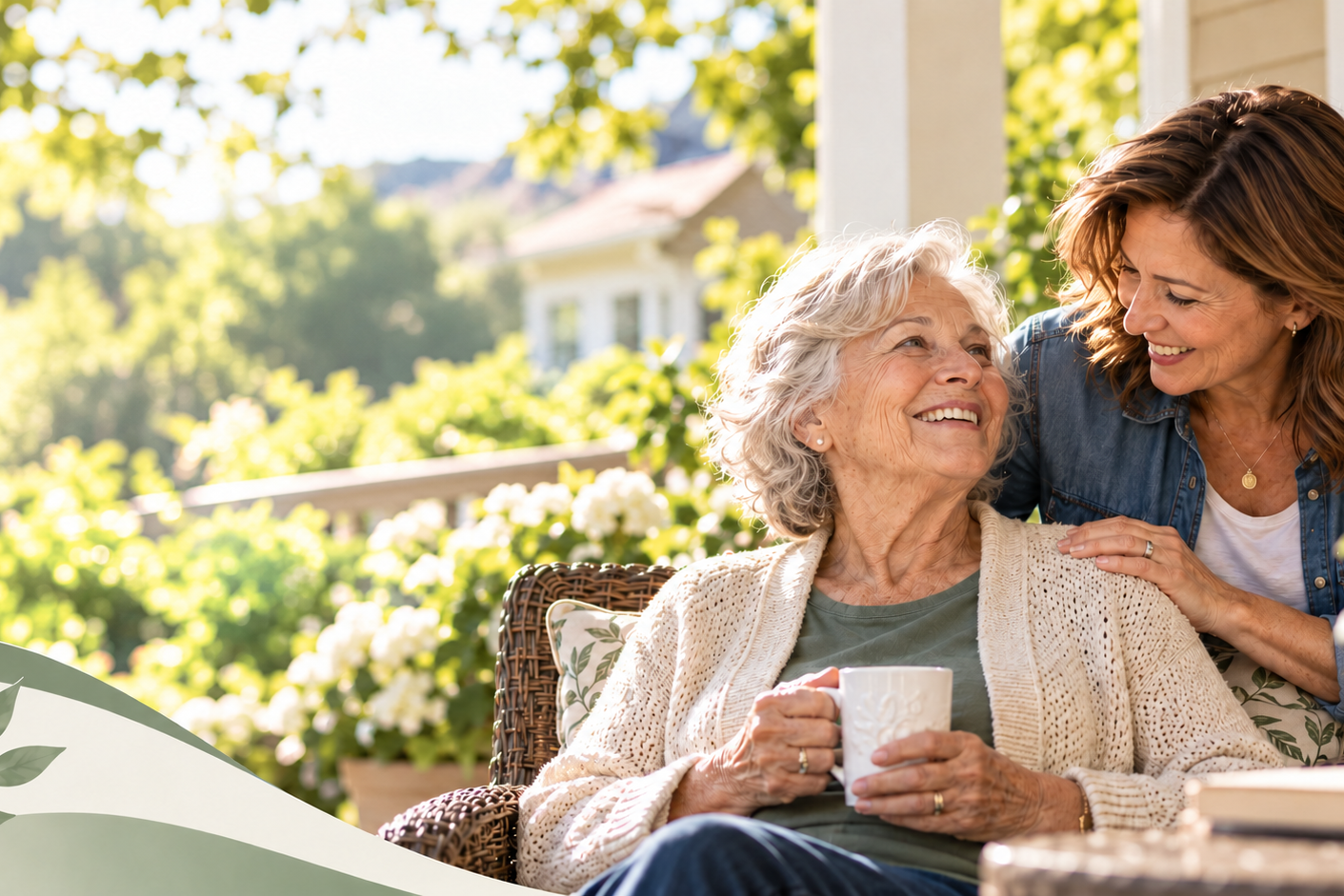
How Much Help Does My Aging Parent Need? A Practical Guide to Assessing Care at Home
Not sure how much help your aging parent may need? This practical guide helps families recognize changes, assess everyday support needs, consider safety and family capacity, and understand when…
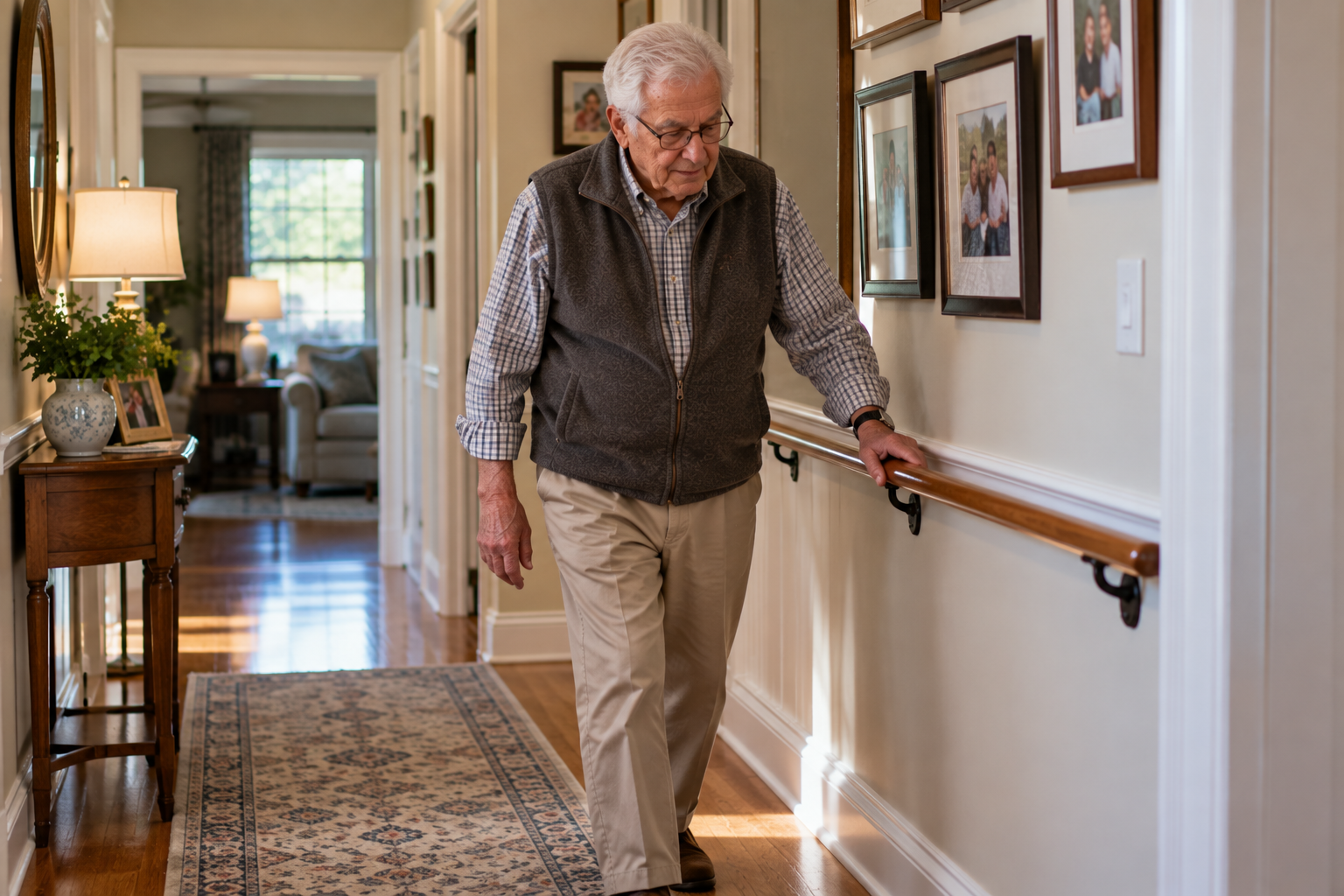
Is It Still Safe for My Aging Parent to Live Alone?
Living alone should be evaluated by how safely and consistently an older adult manages everyday life, not by age alone.
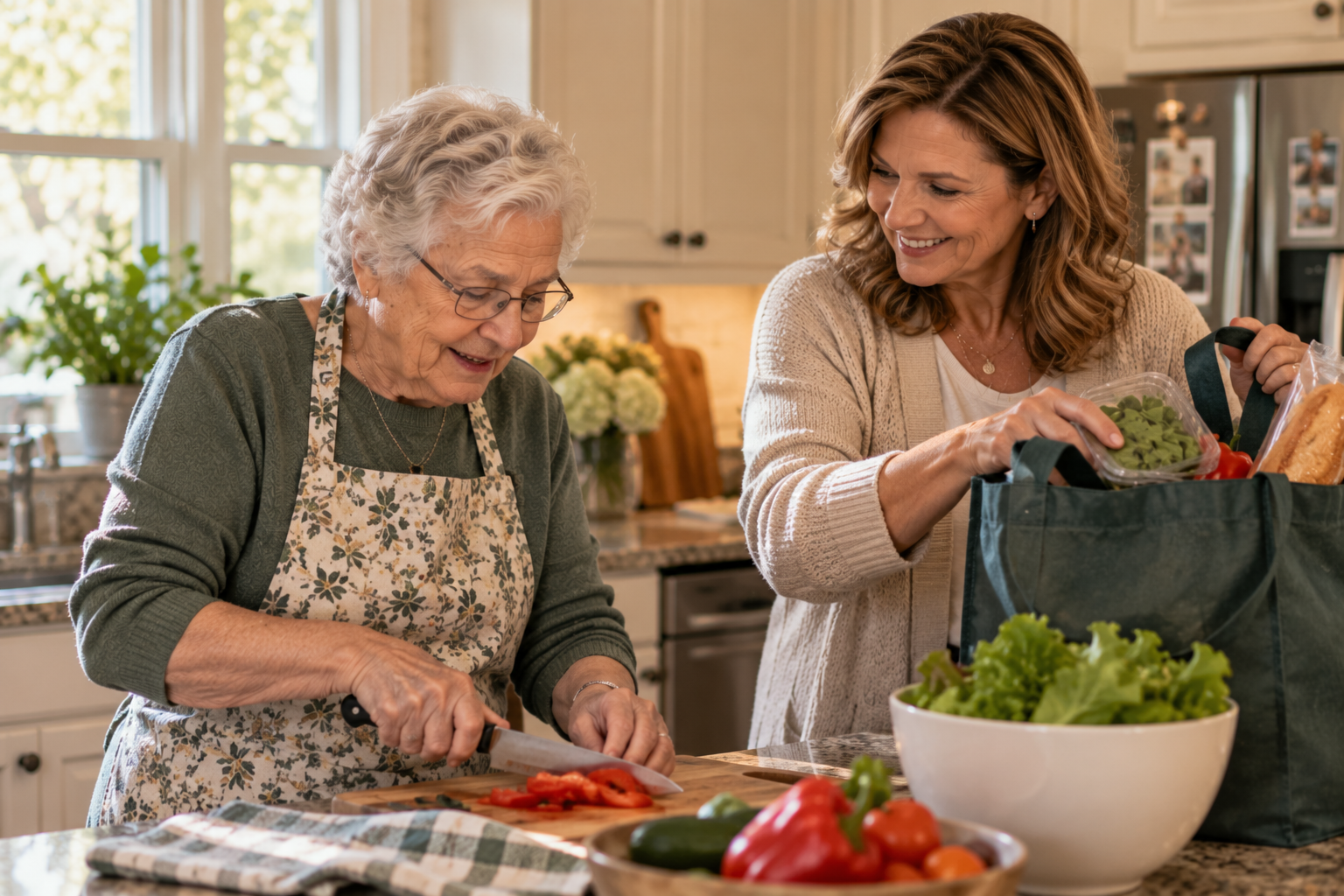
What Kind of Help Can an Older Adult Receive at Home?
A practical guide to matching the difficulties your aging parent is experiencing with the type of help that may make daily life safer, easier, and more sustainable.