
1. Signs Your Aging Parent May Need Help at Home
2. How to Tell Which Daily Activities Your Aging Parent Needs Help With
3. How Often Does My Aging Parent Need Help at Home?
4. Is It Still Safe for My Aging Parent to Live Alone?
5. My Parent Refuses a Caregiver: 7 Ways to Introduce Help Without Taking Away Independence
6. How to Talk to an Aging Parent About Getting Help at Home
7. What Kind of Help Does My Aging Parent Need at Home?
8. When Is Family Caregiving No Longer Enough? How to Know When to Add Professional Home Care
Quick Answer
An aging parent may still be able to live alone safely if they can manage essential routines reliably, move through the home safely, access food and transportation, respond when something goes wrong, and receive dependable support where needed. The question is not simply whether they live alone, but whether the whole support system around them is working.
Living Alone Is Not the Same as Living Without Support
Many older adults live alone successfully for years. What makes the arrangement work is not age. It is the combination of ability, home environment, routines, safety systems, transportation, family support, and access to help when needed. So instead of asking, “Is my parent too old to live alone?”
ask: Can my parent manage the important parts of everyday life safely and reliably in their current home?
Expert tips
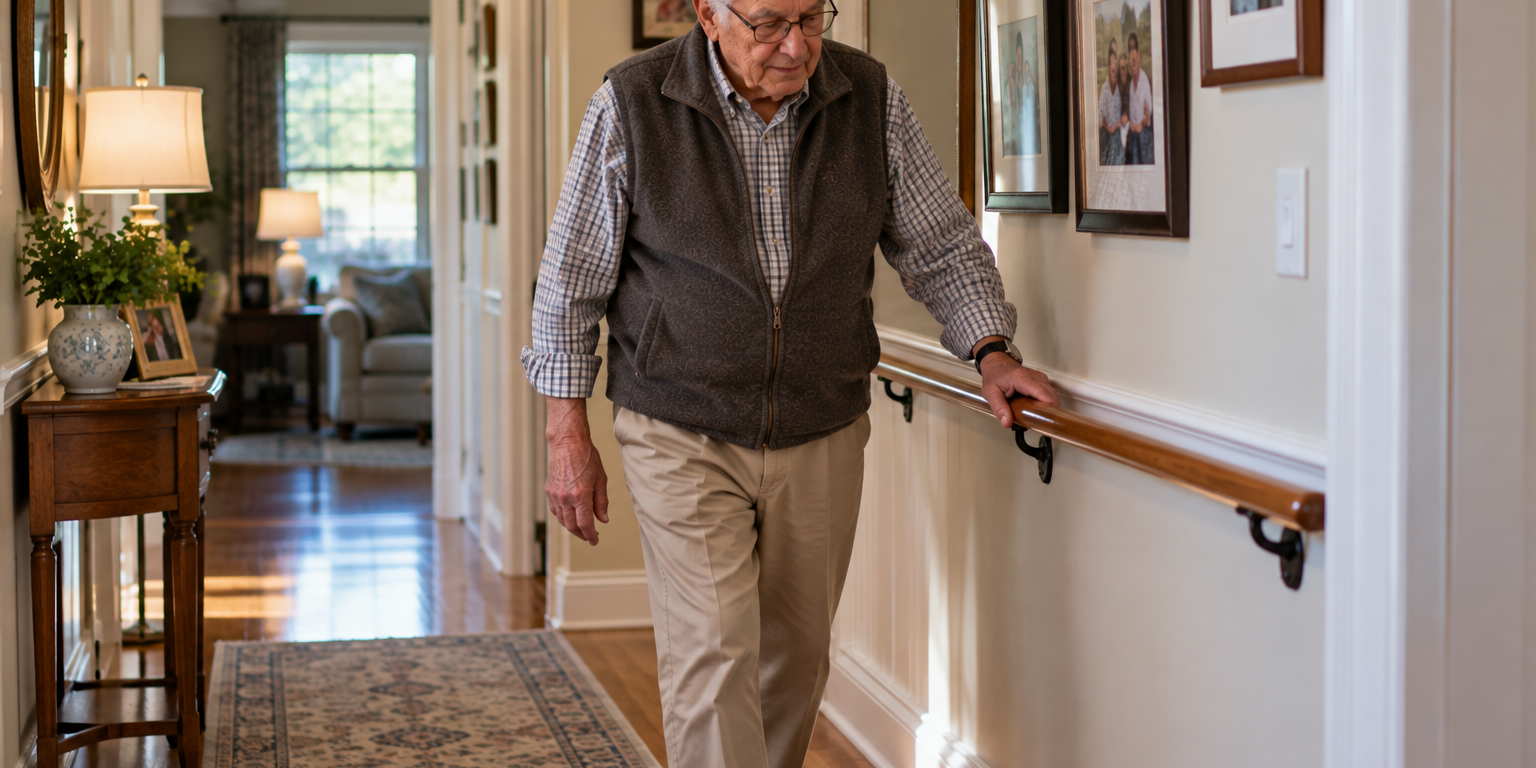
Do not judge safety by whether your parent has had a serious accident yet. Look for the smaller adaptations they may already be making, such as avoiding stairs, no longer using the shower, stopping nighttime driving, or waiting for someone else before completing certain tasks. Those changes can reveal where the current living arrangement is becoming harder to manage.
1. Can They Move Through the Home Safely?
1. Can They Move Through the Home Safely?
Look at:
- getting in and out of bed or chairs;
- walking through common areas;
- stairs;
- bathroom access;
- getting to the door;
- falls or near-falls;
- whether your parent has stopped using parts of the home.
A parent may appear independent because they have quietly stopped doing activities that feel unsafe.
2. Are Meals and Drinks Reliably Available?
2. Are Meals and Drinks Reliably Available?
Check whether your parent can:
- obtain groceries;
- prepare meals;
- eat regularly;
- access drinks;
- clean up safely.
An empty refrigerator or repeated skipped meals may reflect transportation, mobility, fatigue, or difficulty preparing food rather than appetite alone.
3. Is Personal Care Still Manageable?
3. Is Personal Care Still Manageable?
Review bathing, dressing, grooming, toileting, and other everyday routines.
The key question is not whether everything is perfect. Look for changes in safety, frequency, or consistency.
4. Is the Home Remaining Functional?
4. Is the Home Remaining Functional?
Look for changes in:
- laundry;
- trash;
- dishes;
- clutter;
- essential repairs;
- mail and bills;
- lighting;
- pathways through the home.
Small household changes can become safety problems when they begin interfering with movement or basic routines.
FACT CHECK
Living Alone Safely Depends on More Than Age
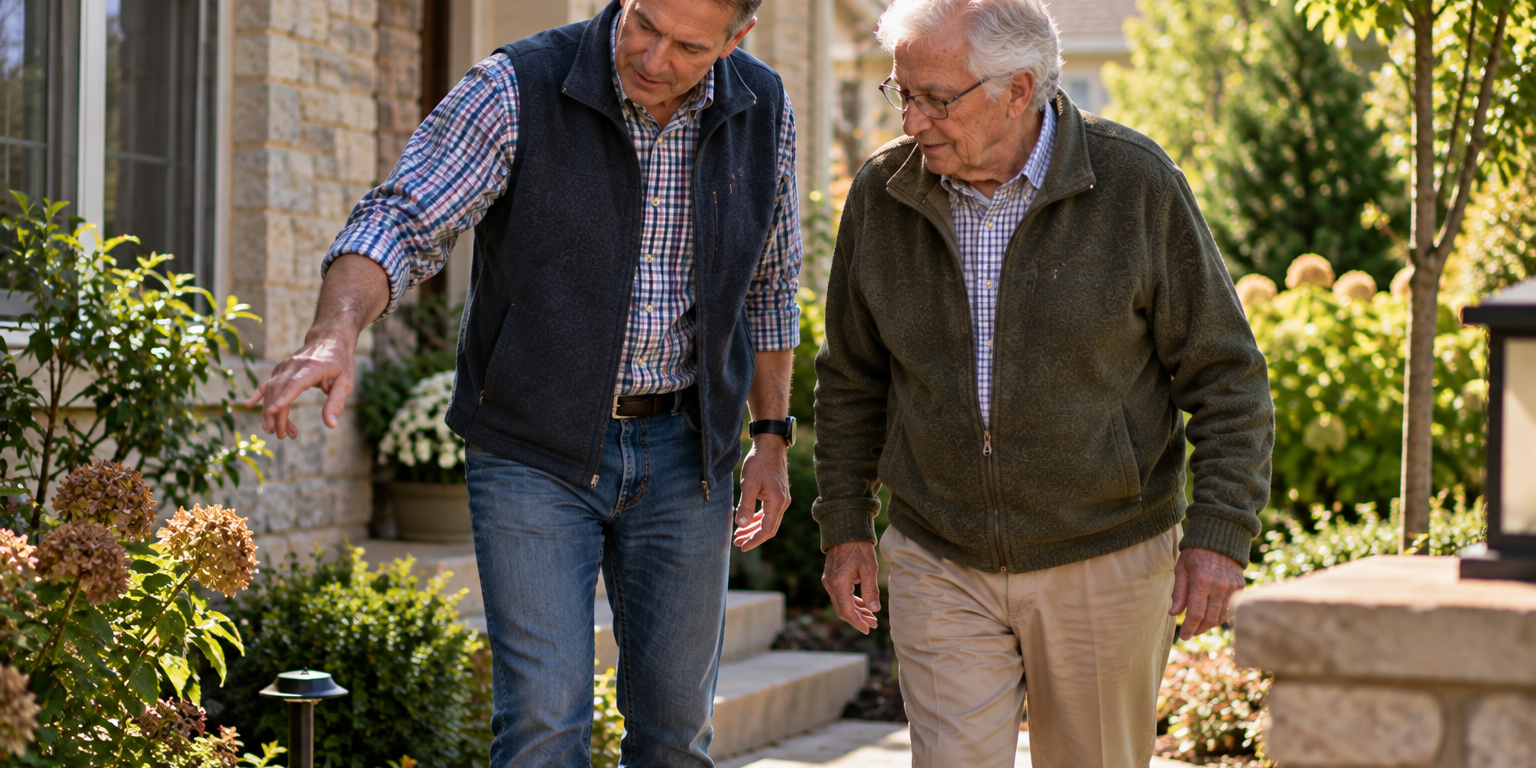
An older adult’s ability to remain safely at home depends on more than their age. Factors such as mobility, ability to manage everyday tasks, access to meals and transportation, the home environment, and the availability of reliable support can all affect whether living alone remains practical and safe.
5. Can Your Parent Access the Outside World?
5. Can Your Parent Access the Outside World?
Living safely at home also depends on being able to reach:
- appointments;
- groceries;
- pharmacies;
- social activities;
- family;
- community resources.
If driving has stopped or become limited, make sure an alternative transportation plan actually exists.

6. Are They Staying Connected?
6. Are They Staying Connected?
Isolation can develop gradually when transportation, mobility, hearing, vision, fatigue, or confidence changes.
Ask whether your parent still sees people, leaves the home, answers calls, and participates in routines they value.
Social connection is part of quality of life, not an optional extra.
7. What Happens If Something Goes Wrong?
7. What Happens If Something Goes Wrong?
Consider:
- Can they reach a phone?
- Does someone check in?
- Are emergency contacts current?
- Can family respond quickly?
- Is there an alert device or other support where appropriate?
- Would anyone notice if the normal routine suddenly stopped?
A plan should not depend on luck.
8. How Much Invisible Support Is Already Holding the System Together?
8. How Much Invisible Support Is Already Holding the System Together?
Your parent may technically live alone while relying on many people. Maybe one child orders groceries, a neighbor checks in, another relative handles transportation, and someone else manages bills or appointments. That support counts. Ask: If those people were unavailable for a week, would the current living arrangement still work?
Small Changes Can Sometimes Make Living Alone More Sustainable
Small Changes Can Sometimes Make Living Alone More Sustainable
A safety concern does not always mean your parent must move or receive constant care.
Possible supports may include:
- transportation assistance;
- meal preparation;
- light housekeeping;
- personal care;
- companionship;
- family check-ins;
- home adaptations recommended by appropriate professionals;
- respite support.
The right combination depends on the actual gap.
When the Situation Needs a Closer Look
When the Situation Needs a Closer Look
Reassess if:
- falls or near-falls are increasing;
- meals are repeatedly missed;
- personal care is declining;
- confusion is interfering with everyday routines;
- family is constantly filling emergency gaps;
- your parent cannot reliably respond when something goes wrong;
- the home has become difficult to manage safely.
Significant or sudden changes should be discussed with an appropriate healthcare professional.
Final Thought
Final Thought
The goal is not to prove that your parent can or cannot live alone. It is to understand whether the current arrangement supports safety, dignity, independence, and a reasonable quality of life.
Sometimes the answer is a small amount of additional help. Sometimes the family needs a larger conversation.
Next guide: My Parent Refuses a Caregiver: 7 Ways to Introduce Help Without Taking Away Independence
Frequently Asked Questions About Signs Your Aging Parent May Need Help at Home
No. Many older adults live alone successfully with the right routines and support.
There is rarely one single sign. Repeated safety issues, missed essential routines, increasing confusion, or a support system that depends on constant emergency intervention deserve closer attention.
Non-medical home care can support specific daily activities and may help make an existing home routine more sustainable.
Non Medical Disclaimer
The information provided in this article is for educational purposes only and is not intended as a substitute for professional medical advice, diagnosis, or treatment. Always seek the advice of your physician or another qualified healthcare provider with questions regarding a medical condition or significant changes in your loved one’s physical health, memory, behavior, or daily functioning. Never disregard professional medical advice or delay seeking it because of something you have read in this article.
Related Posts

How Much Help Does My Aging Parent Need? A Practical Guide to Assessing Care at Home
Not sure how much help your aging parent may need? This practical guide helps families recognize changes, assess everyday support needs, consider safety and family capacity, and understand when…

What Kind of Help Can an Older Adult Receive at Home?
A practical guide to matching the difficulties your aging parent is experiencing with the type of help that may make daily life safer, easier, and more sustainable.

When Is Family Caregiving No Longer Enough? How to Know When to Add Professional Home Care Copy link
A practical guide to recognizing when a family care system is becoming unreliable, too demanding, or difficult to sustain, and how professional home care can reinforce it.