
1. Signs Your Aging Parent May Need Help at Home
2. How to Tell Which Daily Activities Your Aging Parent Needs Help With
3. How Often Does My Aging Parent Need Help at Home?
4. Is It Still Safe for My Aging Parent to Live Alone?
5. My Parent Refuses a Caregiver: 7 Ways to Introduce Help Without Taking Away Independence
6. How to Talk to an Aging Parent About Getting Help at Home
7. What Kind of Help Does My Aging Parent Need at Home?
8. When Is Family Caregiving No Longer Enough? How to Know When to Add Professional Home Care
Quick Answer
To decide what kind of help your aging parent needs at home, start with the parts of everyday life that have become difficult. If bathing or dressing is harder, personal care may help. If meals are inconsistent, meal support may be useful. If household tasks, transportation, social isolation, or family caregiver strain are the main problems, other forms of support may fit better.
The goal is not to choose from a menu of services. It is to match support to the real problem.
Start With the Problem, Not the Service
When families realize an aging parent may need help, it is easy to jump straight to service names. “Do we need personal care?” “Should we hire a caregiver?” “Do we need someone every day?” Those questions make more sense after you understand what has actually become difficult. A parent may still manage bathing and dressing independently but struggle to prepare meals. Another may keep the house tidy but no longer drive safely. Someone else may manage most daily tasks while becoming increasingly isolated. The right type of help depends on the problem you are trying to solve. If you are still identifying which parts of daily life have changed, begin with How to Tell Which Daily Activities Your Aging Parent Needs Help With.

Expert tips
Start with the problem before choosing the service. If meals are being skipped, ask why. The issue may be grocery shopping, standing long enough to cook, transportation, or fatigue. Matching the support to the actual barrier prevents families from adding more help than necessary or choosing the wrong type of help.
1. If Bathing, Dressing, or Personal Care Is Becoming Difficult
1. If Bathing, Dressing, or Personal Care Is Becoming Difficult
Personal care may be useful when your parent is having difficulty with routines such as:
- bathing;
- grooming;
- dressing;
- toileting;
- eating;
- moving through established daily routines.
The important question is not whether your parent can still do the entire activity alone.
Ask which part has become difficult.
For example, your mother may still be able to bathe herself but feel unsafe stepping into the shower. Your father may dress independently but struggle with shoes or buttons.
Support should fill the gap without unnecessarily taking over the parts your parent can still manage.
Learn more: Personal Care
2. If Meals Are Becoming Inconsistent
2. If Meals Are Becoming Inconsistent
The problem may not be eating. Your parent may have difficulty:
- shopping for groceries;
- carrying bags;
- standing long enough to cook;
- preparing balanced meals;
- opening containers;
- cleaning afterward.
You may notice an emptier refrigerator, skipped meals, expired food, or a parent who used to cook regularly but now says preparing food is “too much trouble.”
Meal support can focus on the steps that have become difficult while allowing your parent to remain involved.
Learn more: Meal Preparation
3. If Moving Around the Home Is Becoming Harder
3. If Moving Around the Home Is Becoming Harder
Mobility difficulties can affect many other parts of daily life.
A parent who struggles to stand, use stairs, move between rooms, or get in and out of chairs may also begin avoiding bathing, cooking, laundry, or leaving the home. Before deciding which type of support is needed, look at what the mobility problem is preventing your parent from doing. In some cases, support may involve help with personal routines. In others, changes to the home environment or input from an appropriate healthcare professional may also be important.
If mobility difficulties are affecting everyday routines, return to the broader assessment in How to Tell Which Daily Activities Your Aging Parent Needs Help With.
4. If Household Tasks Are Starting to Pile Up
4. If Household Tasks Are Starting to Pile Up
Laundry, dishes, changing bedding, taking out trash, and basic household upkeep can become tiring long before someone needs hands-on personal care.
Look for changes such as:
- laundry accumulating;
- dishes remaining undone;
- commonly used areas becoming cluttered;
- bedding not being changed;
- routine household tasks being delayed.
The goal is not to maintain a perfect home. It is to make sure the home remains manageable, functional, and comfortable.
Learn more: Light Housekeeping
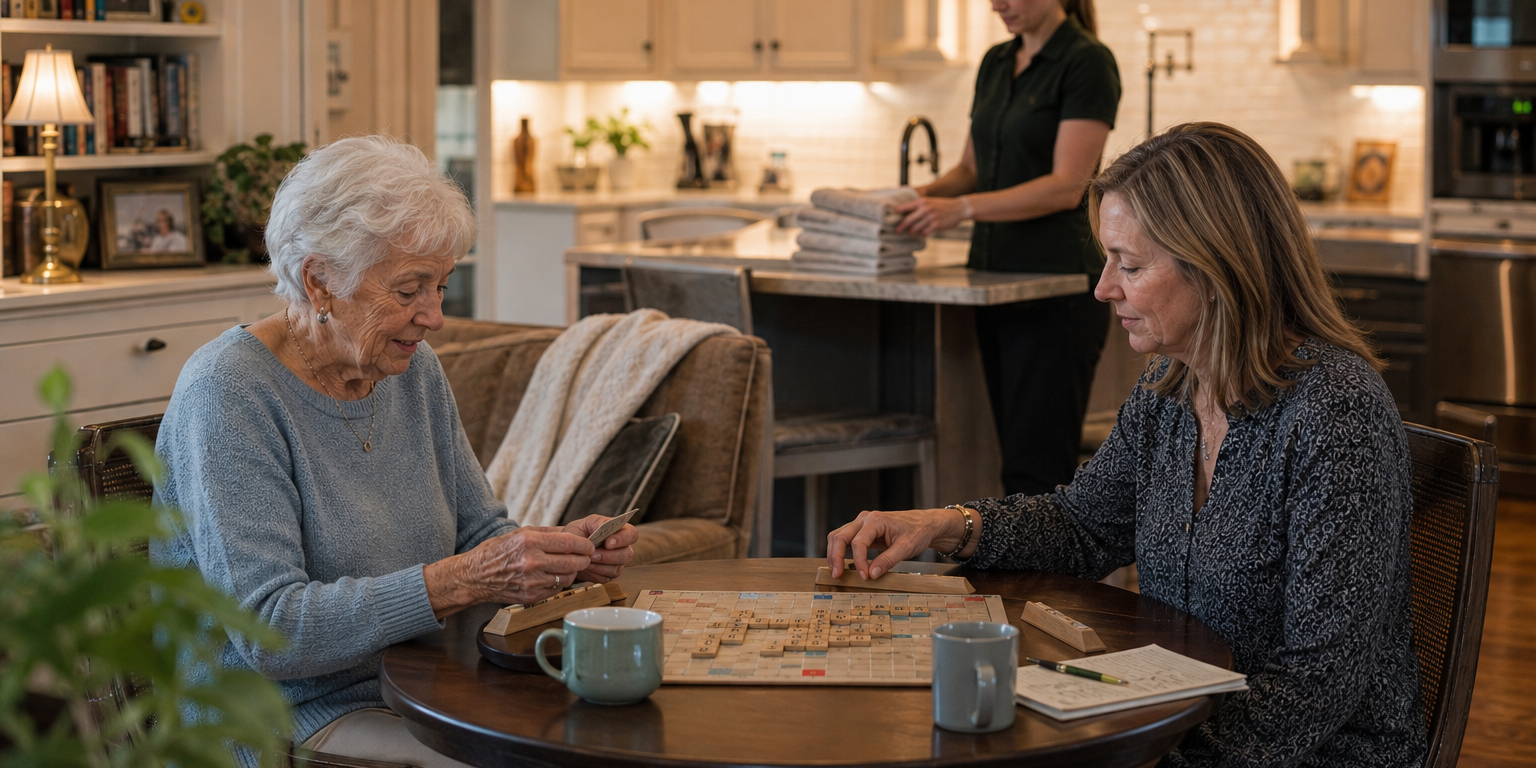
FACT CHECK
Home Support Can Cover More Than Personal Care
Support for older adults living at home can include personal care, meals, household help, transportation, companionship, errands, and respite for family caregivers. The right combination depends on which parts of everyday life have become difficult.
5. If Transportation Is Becoming a Barrier
5. If Transportation Is Becoming a Barrier
A parent may still manage well at home but struggle once they need to leave it.
Transportation difficulties can affect:
- medical appointments;
- grocery shopping;
- pharmacy visits;
- church or community activities;
- social visits;
- everyday errands.
If driving is no longer comfortable or reliable, transportation support can help preserve independence rather than reduce it.
The question becomes:
Can my parent still get where they need and want to go without depending on last-minute help from family?
Learn more: Errands & Transportation

6. If Your Parent Is Becoming More Isolated
6. If Your Parent Is Becoming More Isolated
Sometimes the need is not physical assistance. A parent may still manage personal care and household routines but spend far more time alone than before. You may notice that they:
- stop attending regular activities;
- see friends less often;
- leave the house less;
- spend long periods without meaningful conversation;
- lose interest in routines they used to enjoy.
Isolation may have a practical cause such as transportation, mobility, hearing, vision, or fatigue.
Companionship support can help maintain social connection and everyday engagement.
Learn more: Companionship
7. If the Family Is Carrying More Than It Can Sustain
7. If the Family Is Carrying More Than It Can Sustain
Sometimes your parent appears to be managing because family members are quietly doing more and more. One person handles groceries. Another provides transportation. Someone else checks in every evening. A daughter may be helping with bathing before work. A son may be spending every weekend catching up on household tasks. At some point, the problem is not simply whether the parent is receiving enough help. The question becomes whether the support system is sustainable. If family members are becoming exhausted, missing work, rearranging their lives constantly, or struggling to cover gaps, respite or professional support may help.
Learn more: Respite Care
When Several Needs Overlap
When Several Needs Overlap
Many older adults do not fit neatly into one category. A parent may need:
- meal preparation and transportation;
- personal care and companionship;
- housekeeping and respite;
- support with errands plus help during a morning routine.
That is normal. The goal is not to choose one service label. It is to understand the combination of tasks that would make everyday life safer, easier, and more sustainable. Once you have identified the activities, use How Often Does My Aging Parent Need Help at Home? to think about how frequently support may be needed.
How to Decide What to Address First
How to Decide What to Address First
If several areas need attention, start with three questions:
- Which issue creates the greatest safety concern?
- Which issue is affecting daily life most often?
- Which area would create the biggest relief for your parent or family if support were added?
This helps avoid trying to solve everything at once. A family may discover that transportation is the most urgent gap, while another may realize that meal preparation or morning personal care is creating the most pressure. Start where the need is clearest.
What Non-Medical Home Care Does Not Replace
What Non-Medical Home Care Does Not Replace
Non-medical home care supports everyday living. It does not replace professional medical diagnosis, treatment, therapy, skilled nursing, wound care, or other clinical services. If your parent has sudden or significant changes in physical ability, memory, behavior, or health, involve an appropriate healthcare professional. For a broader explanation of how to begin choosing support, read How to Find Home Care for an Aging Parent: A Quick Guide.
Final Thought
Final Thought
The best support plan is not the one with the most services. It is the one that solves the right problems. Start with what your parent is struggling with, identify the one or two areas creating the biggest difficulty, and build support from there. When you are ready to compare how those needs translate into practical support, explore Evelyn Wells’ Home Care Services.
Next guide: Family Caregiving vs Professional Home Care: When Is It Time for Extra Help?
Frequently Asked Questions

There is no single answer. Some families first notice transportation or household difficulties, while others see changes in personal care, meals, mobility, or social connection. Start with the activity that has become most difficult or unsafe.
No. Your parent may primarily need help with meals, housekeeping, transportation, companionship, errands, or family caregiver relief.
Yes. Needs often overlap. The best plan may combine several forms of support based on the person’s routine.
Non Medical Disclaimer
The information provided in this article is for educational purposes only and is not intended as a substitute for professional medical advice, diagnosis, or treatment. Always seek the advice of your physician or another qualified healthcare provider with questions regarding a medical condition or significant changes in your loved one’s physical health, memory, behavior, or daily functioning. Never disregard professional medical advice or delay seeking it because of something you have read in this article.
Related Posts

How Much Help Does My Aging Parent Need? A Practical Guide to Assessing Care at Home
Not sure how much help your aging parent may need? This practical guide helps families recognize changes, assess everyday support needs, consider safety and family capacity, and understand when…

Is It Still Safe for My Aging Parent to Live Alone?
Living alone should be evaluated by how safely and consistently an older adult manages everyday life, not by age alone.

When Is Family Caregiving No Longer Enough? How to Know When to Add Professional Home Care Copy link
A practical guide to recognizing when a family care system is becoming unreliable, too demanding, or difficult to sustain, and how professional home care can reinforce it.