This Article is Part of a Series
No caregiver should navigate these challenges alone. When your elderly parent refuses help, specialized organizations provide guidance, connection, and practical solutions:
National Organizations
-
Area Agency on Aging: Your local office connects families to community resources, care coordination, and eldercare specialists who understand refusal issues. Find yours through the Eldercare Locator at 1-800-677-1116.
-
American Geriatrics Society: Access http://HealthinAging.org to locate geriatricians specializing in older adults who can address resistance with clinical expertise.
Additional Support Networks
-
Adult Protective Services: Available through your county for situations involving severe self-neglect or safety concerns
-
Caregiver support groups: Offered through hospitals, community centers, and faith organizations where you’ll meet others facing similar refusal challenges
-
Long-term placement companies: Professional consultants who help identify appropriate care facilities based on your parent’s needs and budget
These resources transform isolation into community, providing both emotional support and actionable strategies for what to do when your elderly parent refuses help.
Why is this Important?
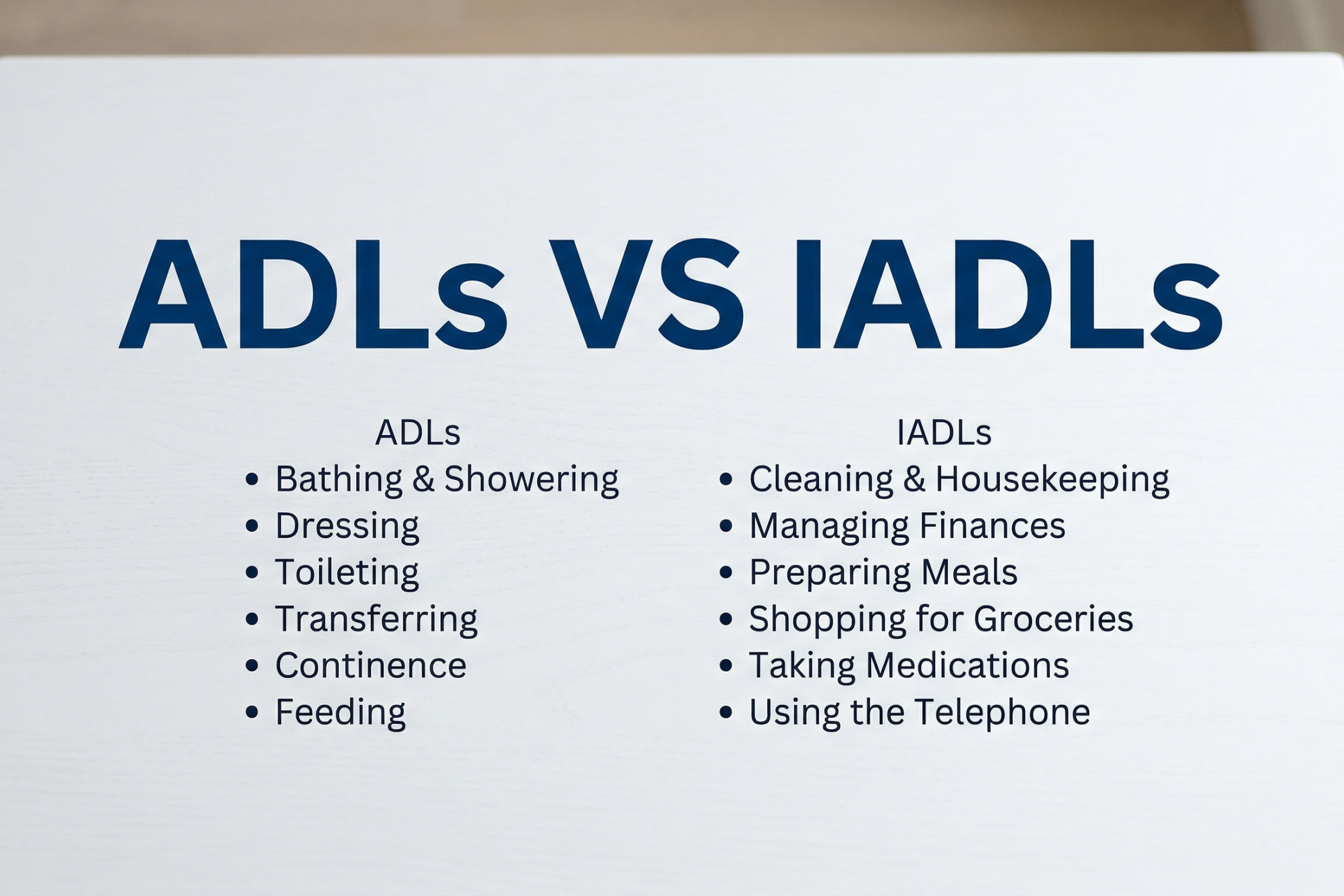
Understanding the distinction between ADLs and IADLs is vital because it prevents caregiver burnout and survivor frustration. Many families feel guilty asking for help because their loved one is "physically fine." However, if you only focus on physical ADLs, you miss the cognitive fatigue that leads to household accidents, missed medications, and social isolation.
Why IADLs Are the Neuro-Fatigue Trigger
IADLs require 10x more cognitive energy than ADLs. While taking a shower (ADL) is a muscle-memory routine, cooking a meal (IADL) requires:
-
Sequencing: Putting things in the right order.
-
Working Memory: Remembering the stove is on while chopping onions.
-
Sensory Filtering: Ignoring the hum of the fridge while reading a recipe.
If your loved one can shower but then has a meltdown or falls asleep for three hours after trying to pay a bill, their brain is hitting an IADL ceiling.
Pro Tip
- To combat neuro-fatigue during IADL tasks, use environmental modification rather than verbal correction. If your loved one is struggling to manage a grocery list (IADL), don’t ask them to write it from scratch. Instead, provide a visual menu with pictures of their favorite foods that they can simply point to. This shifts the task from recall (high cognitive load) to recognition (low cognitive load), allowing them to participate without hitting a cognitive ceiling.
The Decision Matrix: Mapping Out Your Support
As a family caregiver, you shouldn’t have to do it all. Use this matrix to see how a non-medical partner can lighten the load.
|
If your loved one struggles with… |
They need help with… |
Our Support Focus |
|
Physical Mobility |
Basic ADLs |
Physical safety and personal hygiene. |
|
Memory & Planning |
Complex IADLs |
Cognitive cues, reminders, and organization. |
|
Social Isolation |
Companionship |
Engaging in hobbies and community visits. |
Let’s Simplify the Day
Seeing the gap between what your loved one can do and what they used to do is the hardest part of the recovery process. You don’t have to manage that gap alone. Our role is to step in and handle the daily friction so your home feels like a home again, not a hospital ward.
If you’re ready to see how a specialized companion can help your loved one reclaim their independence, let’s talk.
Related Posts
ADLs vs IADLs in Brain Injury: A Non-Medical Guide for Families
When a loved one returns home after a brain injury, the biggest challenges are often the ones you can’t see. You might notice they can walk to the kitchen or get dressed without help, yet they still…
Navigating sibling conflict in caregiving
If you are the sibling who lives closest, or the one who has always been the responsible one, you likely feel a mounting sense of isolation. It starts with a few missed weekend visits and ends with…

Home Care for Seniors: A Guide for Families
As parents and grandparents age, many families begin asking the same question: How can we support them so they remain safe, comfortable, and independent? For many, the answer is home care. Rather…


