
Key Takeaways
1. Share the Load: Replace "I need help" with a clear list of tasks to invite your siblings in.
2. Release the Reins: Let go of doing it perfectl so your siblings feel welcome to try.
3. Lead with Facts: Share gentle, objective updates to help siblings face the reality of a parent’s decline.
4. Protect Your Peace: If siblings can’t show up, hire professional care to heal the family rift.
5. Invite an Ally: Use a neutral expert to bridge the gap when family history gets in the way.
When the Burden Isn't Shared: Navigating Sibling Conflict in Caregiving
If you are the sibling who lives closest, or the one who has always been the responsible one, you likely feel a mounting sense of isolation. It starts with a few missed weekend visits and ends with you managing every doctor’s appointment, grocery run, and emergency alone. This imbalance is the leading cause of Caregiver Resentment; a toxic state that can fracture family bonds for decades.
The goal isn’t just to get help, it’s to shift the family dynamic from a one-person mission to a managed team approach.
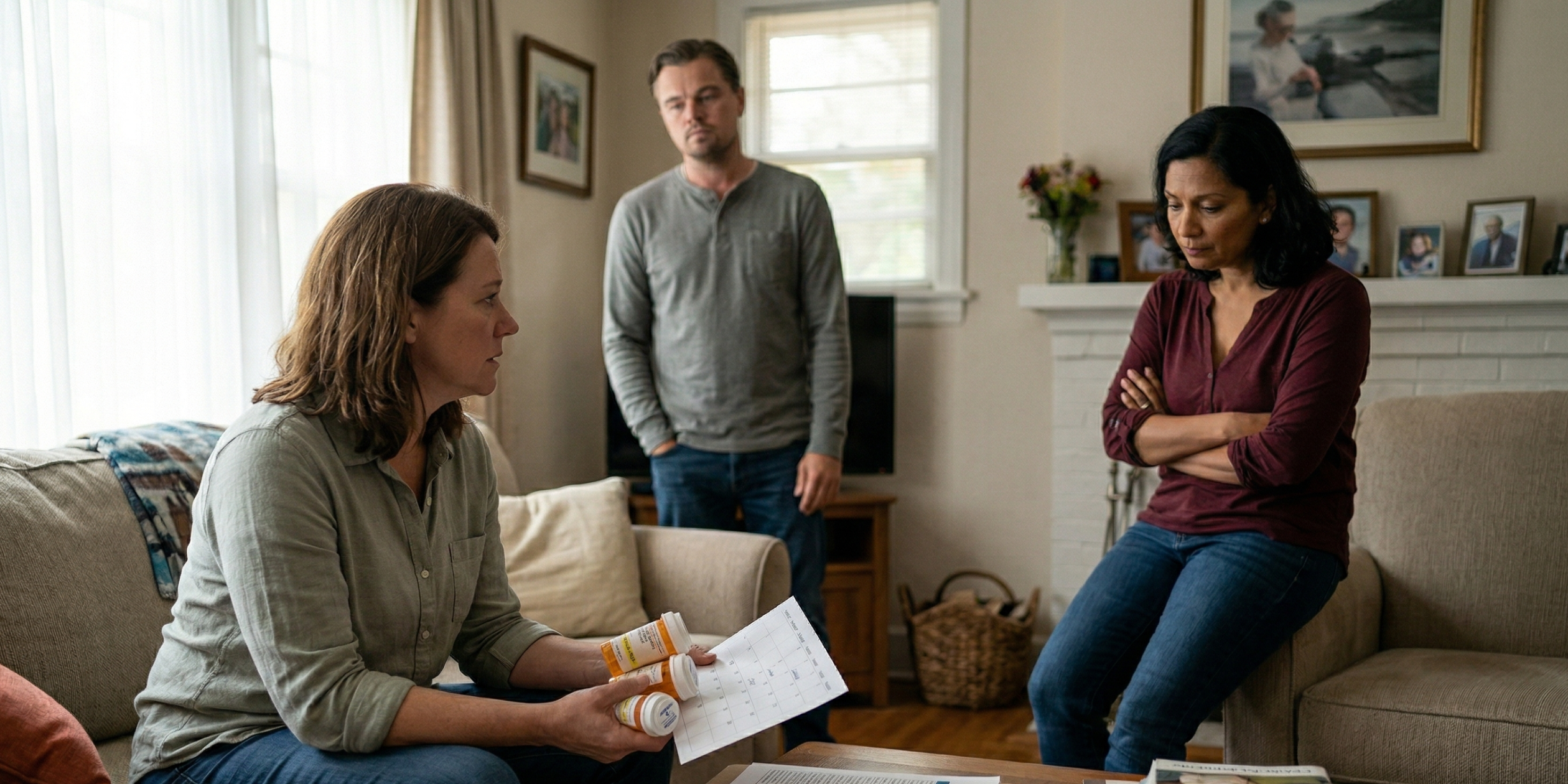
An overwhelmed caregiver sister presents a task list to her detached, avoidant siblings during a tense family meeting.
What is "Avoidance Coping" in Siblings?
It is common for the distant sibling to retreat because they cannot handle the reality of a parent’s decline. This is known as Avoidance Coping.
- The Denial Shield: By staying away, they can pretend Dad is still the man he was five years ago. Your updates about his Gait Decay or Memory Loss are viewed as exaggerations.
- The Impact: Their absence feels like a personal rejection of your hard work.
- The Strategy: Stop trying to convince them of how bad things are. Instead, send a direct, objective weekly update that focuses on facts and data rather than emotions.
Pro Tip
- If a sibling is avoiding the situation because they feel overwhelmed, give them a win. Ask for help with something digital or administrative; like researching a new walk-in tub or organizing a shared family calendar. Success in a small, non-physical task can give them the confidence to step back into the caregiving circle.
What is the Gatekeeper Dynamic?
Sometimes, the primary caregiver inadvertently makes it difficult for siblings to help. This is often called Caregiver Identity.
- The Perfectionist Loop: You feel that no one else can care for Mom “the right way,” so you take over every task. Siblings then feel unneeded or criticized when they do try to step in.
- The Solution: You must be willing to let the “standards” slip occasionally to allow others to participate. If a sibling handles the grocery shopping but buys the wrong brand of bread, let it go. The goal is participation, not perfection.
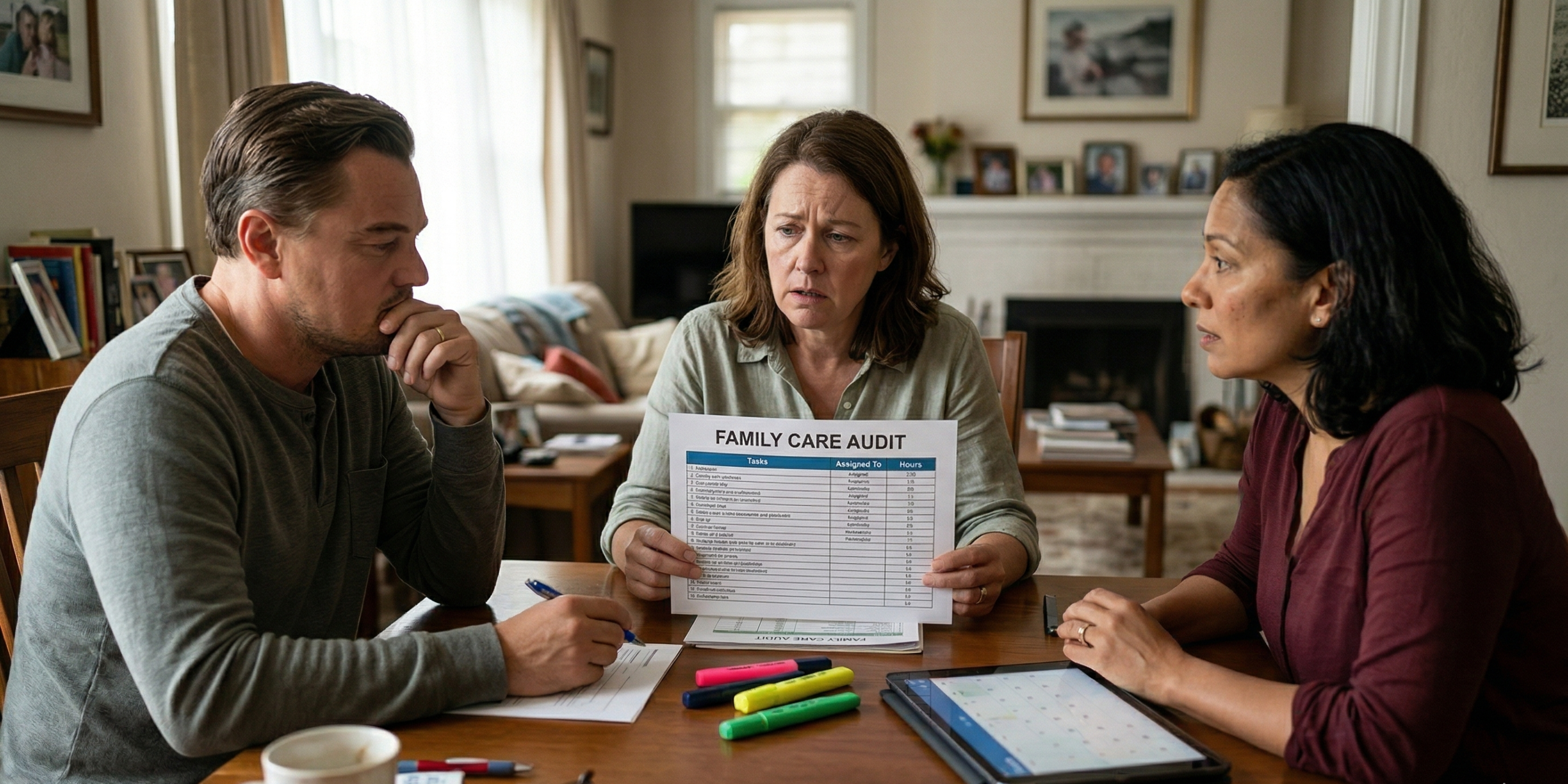
What is a "Family Care Audit"?
To fix the imbalance, you must move the conversation out of the kitchen and into a “Business Meeting” format. This removes the emotional weight and focuses on the logistics.
- List Every Task: Write down everything you do in a week, from physical care to invisible labor like scheduling appointments and managing other things.
- The Allocation: In the meeting, don’t ask “Who can help?” Show the list and ask, “Which of these 10 items can you own?”
- The Out-of-Town Role: Siblings who live far away can still manage the Intelligent Home sensors, pay the bills, or handle the insurance paperwork.
Why is this Important?
Caregiving isn't just about the tasks we see; it’s about the mental load of constantly remembering, planning, and worrying. A Care Audit makes the invisible, visible. When you put it all on paper, you stop being the complaining sibling and start being the lead strategist. It validates your hard work and gives your siblings a clear map of how they can actually support you.
What if Siblings Still Refuse to Help?
If the Business Meeting fails and resentment continues to build, you must protect your own health. This is where the Professional Buffer becomes essential.
- Hire the Difference: If a sibling won’t give their time, and the family has the means, use professional care to fill the gap. It is better to hire a caregiver for those missing 15 hours than to spend the next ten years hating your brother for not showing up.
- The Sibling Script: “Since we are all busy and cannot commit to the 20 hours Mom needs, I have hired a professional team for the weekday mornings. Here is the schedule.”
- Shift the Conflict: This moves the conflict from “You aren’t helping me” to “The care plan is being managed.”
- If there is no means currently, you can check out medicare options here.
What is the Role of a Geriatric Care Manager?
Sometimes, siblings won’t listen to each other because of decades-old family baggage. In these cases, a “Neutral Authority” is required.
- The Expert Voice: A professional can tell your siblings that Mom is no longer safe at home alone; a fact they might ignore when it comes from you.
- Mediation: We often act as the bridge, explaining the clinical reality of burnout to the whole family, which validates the primary caregiver’s experience without it sounding like a personal complaint.
Preserving the Sibling Bond
The goal of caregiving is to honor your parent, but that shouldn’t come at the cost of your relationship with your siblings. Moving from a one-person mission to a shared team approach is the first step toward healing family resentment and protecting your peace.
Related Posts

How Much Help Does My Aging Parent Need? A Practical Guide to Assessing Care at Home
Not sure how much help your aging parent may need? This practical guide helps families recognize changes, assess everyday support needs, consider safety and family capacity, and understand when…

Is It Still Safe for My Aging Parent to Live Alone?
Living alone should be evaluated by how safely and consistently an older adult manages everyday life, not by age alone.

What Kind of Help Can an Older Adult Receive at Home?
A practical guide to matching the difficulties your aging parent is experiencing with the type of help that may make daily life safer, easier, and more sustainable.