
Key Takeaways
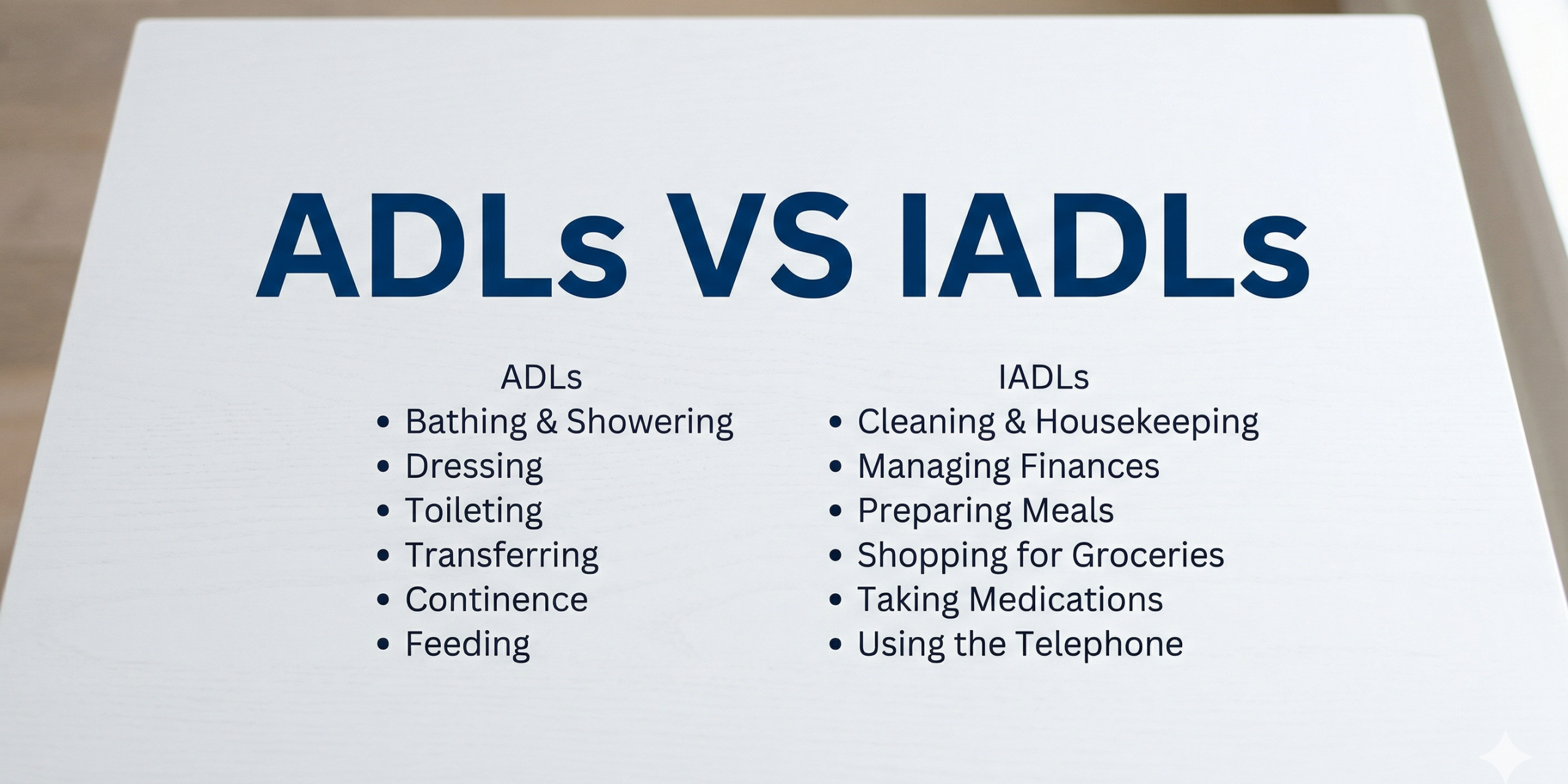
1. ADLs are physical basics (bathing/dressing); IADLs are brain-heavy tasks (money/meals/meds).
2. A survivor can often pass physical tasks but fail cognitive ones due to neuro-fatigue.
3. The 10x Rule: IADLs take significantly more brainpower; a meltdown after a simple chore is a sign of hitting a cognitive ceiling.
4. You don't need a nurse for everything, specialized non-medical care can handle the friction of daily planning and safety.
ADLs vs IADLs in Brain Injury Recovery
When a loved one returns home after a brain injury, the biggest challenges are often the ones you can’t see. You might notice they can walk to the kitchen or get dressed without help, yet they still struggle to stay safe or manage the house once you’re not in the room. This gap is perfectly normal, and in the world of home care, we bridge it by looking at two specific types of support: ADLs and IADLs.
Think of these as the two levels of daily life. One covers the physical basics of getting through the morning, while the other covers the complex thinking needed to navigate the world. By understanding where your loved one sits on this scale, you can stop guessing what they need and start building a support system that protects their independence without letting them get overwhelmed.
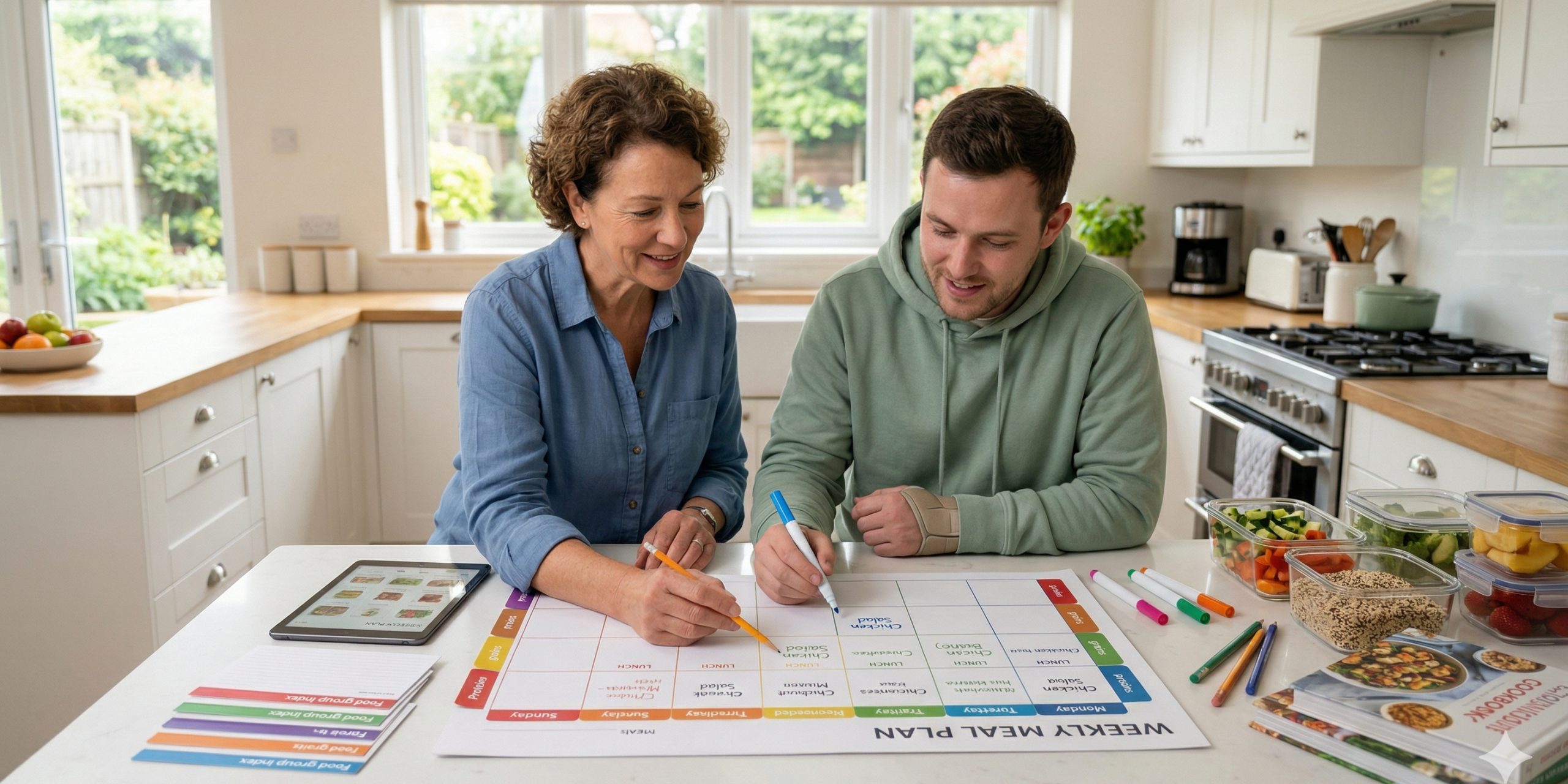
A non-medical caregiver and a brain injury survivor working together on a weekly meal plan in a bright, organized kitchen.
What are ADLs? (The Basic Skills)
Activities of Daily Living (ADLs) are the foundational tasks of physical survival. After a brain injury, a person might have the physical strength to do these but lack the “sequencing” (the order of steps) to finish them.
-
Bathing & Grooming: Helping a loved one stay clean and refreshed while maintaining their dignity.
-
Dressing: Assisting with buttons or zippers that have become frustratingly difficult.
-
Safe Transfers: Helping someone move from a bed to a chair without the risk of a fall.
-
Meal Assistance: Ensuring they are eating nutritious meals and staying hydrated.
What are IADLs? (The Independence Skills)
Instrumental Activities of Daily Living (IADLs) are the complex tasks that allow someone to live independently. This is where Neuro-fatigue usually strikes. A survivor might look fine during breakfast (ADL), but be completely exhausted after trying to write a grocery list (IADL).
-
Companion Shopping: Going to the store together to navigate the overwhelming aisles and noise.
-
Light Housekeeping: Keeping the environment calm, organized, and free of trip hazards.
-
Medication Reminders: Helping them stay on track with their routine so they never miss a dose.
-
Transportation: Providing a safe ride to follow-up appointments or social outings.
It is very common for a brain injury survivor to “pass” their ADLs (they can dress and feed themselves) but fail their IADLs (they cannot navigate a grocery store or manage a bank account). This gap is often where families find themselves without enough professional support.
Why is this Important?
Understanding the distinction between ADLs and IADLs is vital because it prevents caregiver burnout and survivor frustration. Many families feel guilty asking for help because their loved one is "physically fine." However, if you only focus on physical ADLs, you miss the cognitive fatigue that leads to household accidents, missed medications, and social isolation.
Why IADLs Are the Neuro-Fatigue Trigger
IADLs require 10x more cognitive energy than ADLs. While taking a shower (ADL) is a muscle-memory routine, cooking a meal (IADL) requires:
-
Sequencing: Putting things in the right order.
-
Working Memory: Remembering the stove is on while chopping onions.
-
Sensory Filtering: Ignoring the hum of the fridge while reading a recipe.
If your loved one can shower but then has a meltdown or falls asleep for three hours after trying to pay a bill, their brain is hitting an IADL ceiling.
Pro Tip
- To combat neuro-fatigue during IADL tasks, use environmental modification rather than verbal correction. If your loved one is struggling to manage a grocery list (IADL), don’t ask them to write it from scratch. Instead, provide a visual menu with pictures of their favorite foods that they can simply point to. This shifts the task from recall (high cognitive load) to recognition (low cognitive load), allowing them to participate without hitting a cognitive ceiling.
The Decision Matrix: Mapping Out Your Support
As a family caregiver, you shouldn’t have to do it all. Use this matrix to see how a non-medical partner can lighten the load.
|
If your loved one struggles with… |
They need help with… |
Our Support Focus |
|
Physical Mobility |
Basic ADLs |
Physical safety and personal hygiene. |
|
Memory & Planning |
Complex IADLs |
Cognitive cues, reminders, and organization. |
|
Social Isolation |
Companionship |
Engaging in hobbies and community visits. |
Let’s Simplify the Day
Seeing the gap between what your loved one can do and what they used to do is the hardest part of the recovery process. You don’t have to manage that gap alone. Our role is to step in and handle the daily friction so your home feels like a home again, not a hospital ward.
If you’re ready to see how a specialized companion can help your loved one reclaim their independence, let’s talk.
Related Posts

How Much Help Does My Aging Parent Need? A Practical Guide to Assessing Care at Home
Not sure how much help your aging parent may need? This practical guide helps families recognize changes, assess everyday support needs, consider safety and family capacity, and understand when…
Is It Still Safe for My Aging Parent to Live Alone?
Living alone should be evaluated by how safely and consistently an older adult manages everyday life, not by age alone.
What Kind of Help Can an Older Adult Receive at Home?
A practical guide to matching the difficulties your aging parent is experiencing with the type of help that may make daily life safer, easier, and more sustainable.