
Key Takeaways
1. Remote Patient Monitoring tracks health data continuously; no appointment needed.
2. Most crises arrive as trends, before they become emergencies. RPM catches the trend.
3. Medicare Part B covers it — three conditions, one conversation with their physician.
4. Resistance is usually about independence, not technology. Reframe the device as something for you, not them.
5. Passive options exist — no wearables, no cameras, no compromise.
What is Remote Patient Monitoring?
There’s a particular kind of math you do without meaning to. The last time you talked to your parent. Whether anything in their voice was off. Whether the two days since then mean nothing, or mean you should have called sooner.
Most families never hear the name for the thing that could change that math. It’s called remote patient monitoring — RPM, for short — and it’s quietly become one of the most useful tools in home care precisely because it doesn’t wait for you to call, or for your parent to mention something is wrong. It just watches, gently and continuously, for the kind of change that usually goes unnoticed until it isn’t.
This isn’t surveillance. It’s the closest thing to being there that currently exists — and almost no one has told you it’s an option.
What remote patient monitoring actually does — and why it's different from a check-in call
A phone call tells you how your parent sounds right now. Remote patient monitoring tells you how they’ve been — quietly, continuously, without anyone having to remember to check.
The devices themselves are simple: a connected blood pressure cuff, a glucose monitor, a sensor mat, a wearable that tracks heart rate and sleep. What makes RPM different isn’t the hardware. It’s the pattern. A single reading is a snapshot. A month of readings is a trend — and trends are where the early warnings live. If your father’s resting heart rate creeps upward for three days running, or your mother’s sleep has been fragmented for a week, someone already knows. Nobody had to notice it on a call.
Researchers studying nurse-assisted RPM programs describe what happens between patients and care teams as “remote caring encounters” — a name that captures something real: the relationship doesn’t disappear when the visit does. It continues, quietly, in the background. In a 2023 JMIR survey of more than 3,100 RPM patients, 88.97% said they felt comfortable managing their health from home, and 93.58% said they were satisfied with the experience. People who actually use this report feeling more capable, not more watched.
You’ve probably never heard the term remote patient monitoring before this article. That gap — between what’s quietly become standard in home-based care and what most families know exists — is exactly what this article is for.
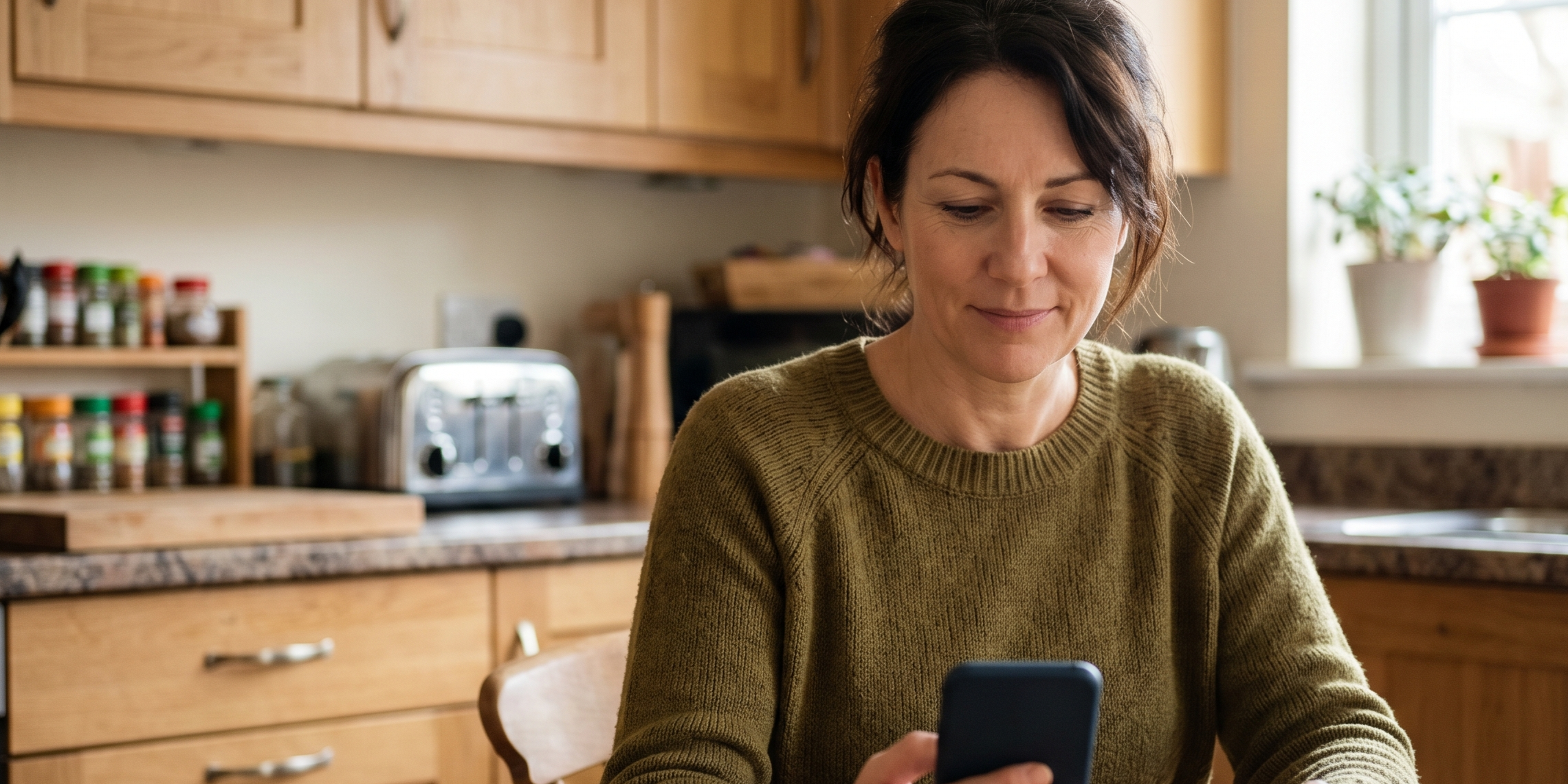
Peace of mind, just a glance away.
What RPM detects — and when AI becomes the thing that catches what no one else would
Here’s what makes the next layer of this technology worth understanding: it doesn’t compare your parent to anyone else. It compares your parent to themselves.
A missed meal, a longer-than-usual stretch in the bathroom, a shift in how often someone gets up at night; none of that means anything against a population average. Against your mother’s own baseline, built from months of quiet data, it can mean something is changing before she’d think to mention it, or before she’d even notice it herself. Researchers tracking these systems have found that wearables can pick up subtle, longitudinal behavioral shifts; changes in movement, sleep, and routine, before clinical symptoms become obvious enough for anyone to flag in a regular visit.
Some of the newer systems do this without a single wearable. Passive home sensors can track wandering risk, disrupted sleep, and reduced activity using motion patterns alone, useful for a parent who would never agree to wear a device but might not object to a sensor they never see.
It’s worth being honest about where this technology still has limits. AI pattern detection is improving quickly, but it isn’t uniformly reliable across every condition or every home setup yet. What doesn’t depend on AI being perfect is the continuous data collection underneath it, that part already works, and it’s already catching things a phone call never could.
Why is this Important?
Catching a pattern shift in week one is a conversation with a doctor. Catching it three months later, after it's become a fall or a hospital stay, is a crisis. RPM moves that moment earlier. That's the whole point.
What Medicare covers — and the three things your parent's physician needs to confirm
RPM isn’t a luxury technology reserved for families who can pay out of pocket. Medicare Part B covers it, but three specific conditions have to be met first.
Your parent needs an established relationship with the physician ordering the monitoring. The device has to capture at least 16 days of readings each month. And the provider has to spend at least 20 minutes a month actually reviewing that data, not just receiving it. Meet those three conditions, and RPM is billable under Medicare like any other Part B service: your parent pays 20% coinsurance after the annual Part B deductible, which was $257 in 2025.
A 2026 update is worth knowing about, too. New CPT billing codes introduced this year expanded who qualifies; patients who don’t consistently hit that 16-day threshold now have a path to coverage that didn’t exist before. [If you’re already checking what your parent’s Medicare plan covers for telehealth, the same plan questions apply in our full guide on Medicare Telehealth Coverage in 2026).
One honest caveat: not every physician offers an RPM program, and access still varies by provider, geography, and plan. The way to find out is to ask directly: “Do you offer remote patient monitoring, and would my parent qualify under Medicare Part B?” That single question is the entire first step.
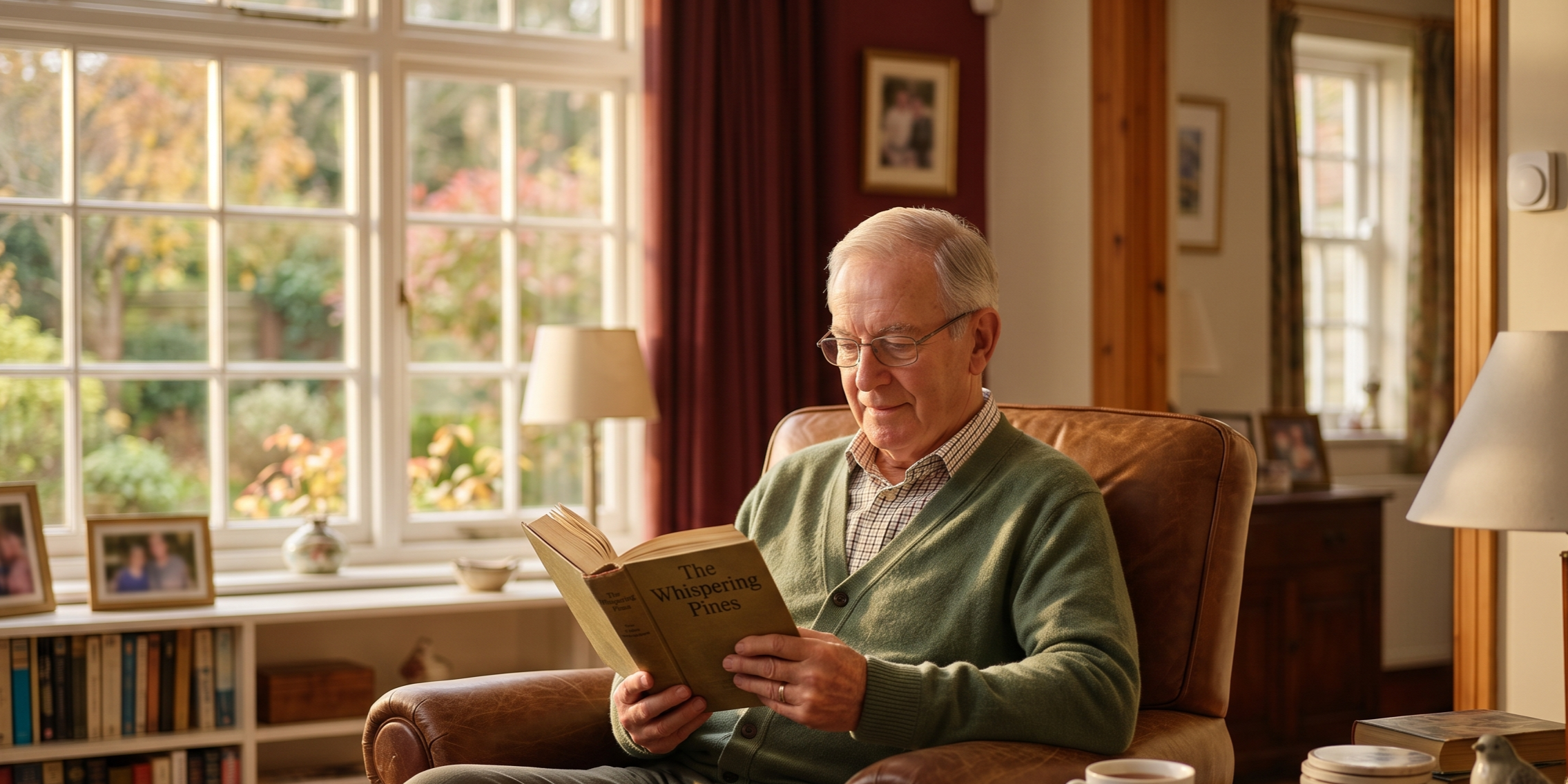
Safety that blends seamlessly into the background of everyday life.
How to introduce RPM to a parent who doesn't want to feel watched
The hardest part of remote patient monitoring is rarely the technology. It’s the conversation.
Resistance almost never comes from the device itself, it comes from what the device seems to represent. A blood pressure cuff that reports to someone else can feel less like a safety net and more like an admission: that independence is slipping, that someone else is now in charge of watching. That reaction is not stubbornness. It’s a reasonable response to feeling like control is being taken away.
The reframe that tends to work isn’t about your parent at all. It’s about you: “This isn’t for you. It’s for me. It’s the thing that lets me stop running through worst-case scenarios every time I don’t hear from you for a couple of days.” That sentence does something a list of safety benefits can’t, it tells the truth about whose anxiety this is actually solving.
Questions open doors better than arguments do. “What worries you most about living alone?” and “What would help me worry less?” tend to get further than “you need this.” And if a wearable is where the conversation stalls, it’s worth knowing that passive sensor options; no device to wear, nothing to remember, exist for exactly that reason.
The goal isn’t compliance. It’s part of the broader conversation about what a home care plan actually looks like one where your parent’s voice is in the room, not just their data.
What "being there" actually looks like when you can't be there
Remote patient monitoring does not replace presence. It creates a different kind of it that is continuous, quiet, and available in the space between calls where most things actually happen.
Your parent does not have to be seriously ill to benefit from it. They have to be living alone while someone who loves them is somewhere else, running the arithmetic of no news and hoping it means good news. Remote patient monitoring is the specific technology that changes what that arithmetic feels like.
The next step is one conversation with their physician: do you offer RPM?, does my parent qualify under Medicare Part B?, and can we start before something happens rather than after? These questions take two minutes. The answer changes the care plan.
For the full picture of how RPM fits into a broader telehealth and home care strategy, See our full guide on Telehealth and Home Care for Seniors, the parent article. Or if you’re ready to talk through what a monitoring plan looks like for your parent’s specific situation, book a free 15 minute call with us or call us now at +1 (317) 661-4416
The distance doesn’t have to mean not knowing. That’s what this technology is for.
Non Medical Disclaimer
The information provided in this article is for educational purposes only and is not intended as a substitute for professional medical advice, diagnosis, or treatment. Always seek the advice of your physician or other qualified health provider with any questions you may have regarding a medical condition. Never disregard professional medical advice or delay in seeking it because of something you have read in this article.
Related Posts

How Much Help Does My Aging Parent Need? A Practical Guide to Assessing Care at Home
Not sure how much help your aging parent may need? This practical guide helps families recognize changes, assess everyday support needs, consider safety and family capacity, and understand when…
Is It Still Safe for My Aging Parent to Live Alone?
Living alone should be evaluated by how safely and consistently an older adult manages everyday life, not by age alone.

What Kind of Help Can an Older Adult Receive at Home?
A practical guide to matching the difficulties your aging parent is experiencing with the type of help that may make daily life safer, easier, and more sustainable.