
Key Takeaways
1. Most homes aren't built for aging safely. Only 10% of American homes meet the basic definition of being "aging-ready," making it important for families to assess their loved one's home before a crisis occurs.
2. Start with fall prevention, not cosmetic upgrades. The highest priority home modifications are those that reduce the risk of falls—especially installing grab bars in the bathroom, which offer one of the greatest safety benefits for a relatively low cost.
3.Use the three-question assessment to identify urgent needs. Check whether the home has: A stepless entry, A bedroom on the main floor, A full bathroom on the main floor. Missing any of these indicates where planning should begin.
4. Not every home should be extensively modified. Before investing in major renovations, determine whether the home can realistically support aging in place. In some cases, moving to a more suitable home may be a better long-term decision.
5. Planning early saves money, stress, and difficult decisions later. Assess the home now, inspect the bathroom, and get at least one contractor quote. Taking these simple steps before a fall or hospitalization gives families more options and better outcomes.
Introduction
The bathroom in her mother’s house has one towel bar. It runs along the wall beside the tub; chrome, decorative, installed sometime in the 1980s, and it is not a grab bar. It was never meant to bear weight. But her mother reaches for it anyway, every morning, because it is the only thing there to reach for.
Most homes were built this way. Not carelessly, just for people who didn’t need what her mother needs now. A 2023 U.S. Census Bureau report confirmed what many families discover the hard way: only 10% of American homes meet even the baseline definition of aging-ready. Ninety percent do not. That number isn’t a call to panic. It is permission to stop wondering whether the concern is reasonable.
It is. And the question is no longer whether the house needs attention, it’s which home modifications for seniors to prioritize first.
What "aging-ready" actually means, and the three-question test for your parent's home
The U.S. Census Bureau defines an aging-ready home with three features: a stepless entry, a bedroom on the most-used floor, and a full bathroom on that same floor. That’s it. No smart-home technology, no medical equipment, no structural overhaul. Just those three things, and 90% of American homes don’t have all of them.
You can run this assessment on your parent’s home right now, without a contractor and without a checklist twelve pages long.
Can your parent enter the home without climbing steps? A single step at the front door is enough to strand someone after a hip replacement or during an icy Indiana winter. Stepless entry is not a luxury feature, it is the difference between a home that works during a health event and one that doesn’t.
Is there a bedroom on the main floor? Stairs become a daily negotiation as mobility changes. A main-floor bedroom means your parent isn’t making that negotiation twice a day, every day, on legs that may not always cooperate.
Is there a full bathroom on that same floor? Not a powder room, a full bathroom with a tub or shower. This is the feature most older homes lack, and its absence is the one that drives the most expensive modification conversations.
If the answer to any of these is no, the house is in the 90%. That is not a verdict, it is a starting point. The question is not whether to act, but where to start. And that answer is more specific than most guides on senior-friendly home changes will tell you.
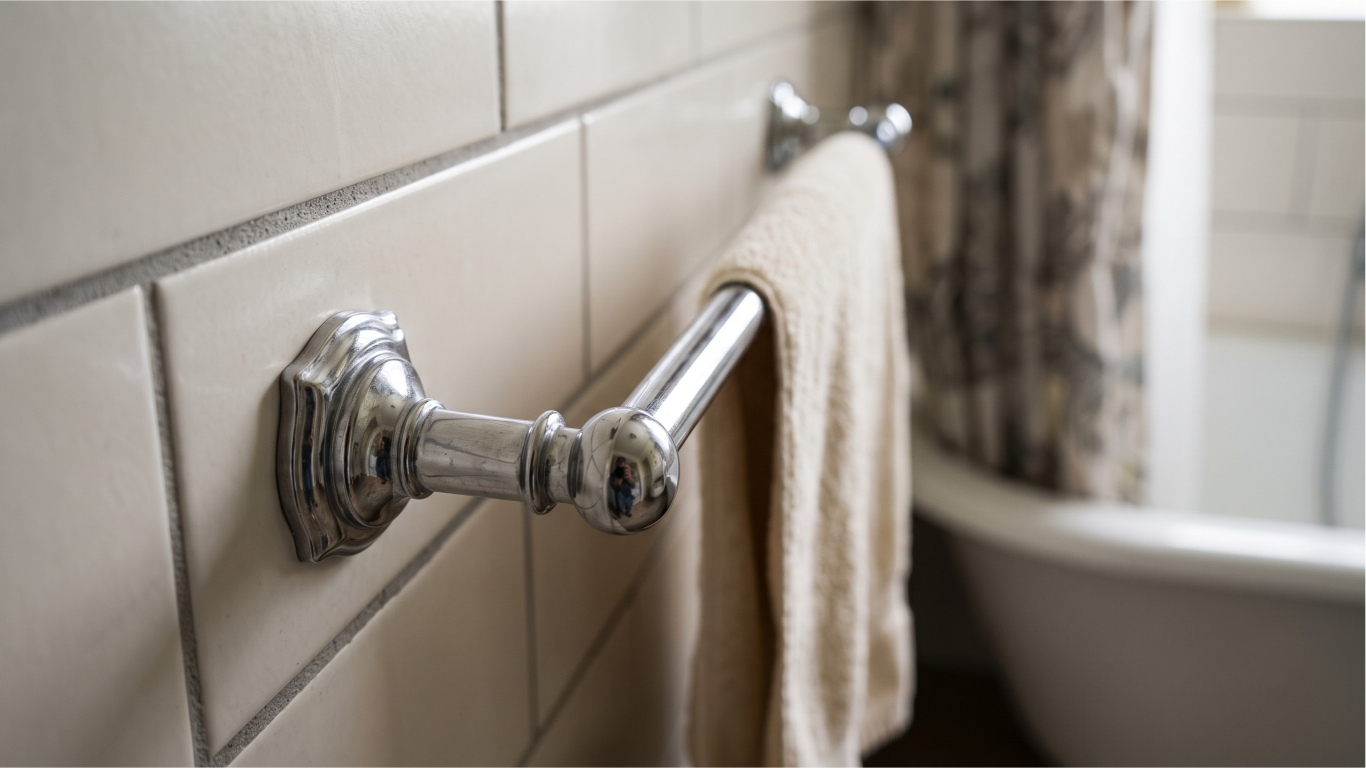
Close-up of a decorative chrome towel bar on a tiled bathroom wall beside a bathtub.
The home modification for seniors that matters most
Every year, 1 in 4 older adults falls. According to the CDC, falls among adults 65 and older caused more than 38,000 deaths in 2021, making them the leading cause of injury death in that age group. Nearly 3 million older adults end up in emergency departments annually because of a fall. These are not freak accidents. They are predictable events in unpredictable homes, and the starting point for any honest conversation about home safety for elderly parents.
Here is the distinction most content about aging in place home modifications never makes: there are modifications that prevent falls, and there are modifications that improve comfort and independence. They are not the same category, they do not carry the same urgency, and treating them as equal is exactly how families end up overwhelmed by a list they cannot afford and do not know how to prioritize.
Fall-prevention modifications belong first. Always.
Why is this Important?
The bathroom is the highest-risk room in any home for an older adult; wet floors, hard surfaces, and weight-bearing movements on slippery tile. Grab bars at the toilet, at the tub entry, and along the tub wall are the single highest return-on-investment modification available.
According to HomeAdvisor, the average installed cost is $300. A contractor installing three bars in one job typically runs about $250. For the leading cause of injury death in this population, that is a remarkably accessible first step.
This is not a nice-to-have. It is the modification that should happen before any other conversation about the house.
The second priority: getting in and out safely
Grab bars address what happens inside the home. Stepless entry addresses whether the home remains usable at all.
This is the second of the Census Bureau’s three aging-ready baseline features, and it is the one families most often defer because it feels like a bigger project than it is. A stepless entry is not cosmetic. It determines whether your parent can leave for a medical appointment and return afterward. It determines whether a walker or wheelchair can cross the threshold without assistance. During a hospitalization or rehabilitation stay, it is often the single feature that decides whether discharge home is even possible.
The cost depends on what the entry requires. According to All American Mobility, a modular aluminum ramp, which can be installed in a day and removed if circumstances change, runs $1,500 to $6,000 depending on length and configuration. A wood ramp costs $1,000 to $4,000. A permanent concrete ramp starts around $4,000 and can exceed $10,000. For families in early planning mode, the modular option is often the right first call: it solves the problem now without committing to a permanent structural change while decisions are still being made.
The window between “we should probably do something about those steps” and “we needed that ramp yesterday” closes faster than most families expect. Stepless entry is the modification that buys time, for every other conversation that follows.

.A securely installed stainless steel grab bar next to a shower entryway in a brightly lit, modern bathroom.
What can wait and the honest conversation about homes that may not be worth modifying
Wider doorways. Kitchen modifications. Stair lifts. A full main-floor bathroom addition. These are senior-friendly home changes worth planning for, not an urgency list. They matter. They are worth thinking about. But they are independence and convenience modifications, not fall-prevention measures, and conflating the two is how families burn through limited budgets on the wrong things first.
The average home modifications for seniors cost $4,500 for a full retrofit, according to HomeAdvisor. That number is useful as a planning anchor, but it obscures a wide range. A Wall Street Journal analysis found that aging-in-place updates can run anywhere from $10,000 to $100,000 depending on the scope of work. The difference between those two figures is almost always determined by one question: does the home have a main-floor bathroom, or does one need to be created?
If the only bathroom is upstairs and no conversion is structurally feasible, the math changes significantly, and honestly, it sometimes doesn’t work. This is the question most home modification guides avoid: not every home is cost-effectively modifiable. Some houses are so structurally mismatched to what aging requires that the money spent trying to fix them exceeds the cost of better alternatives.
Knowing this early is not defeat. It is the most useful thing triage clarity can produce. The difference between spending $4,500 on grab bars and a ramp, and spending $40,000 discovering the house still doesn’t work. Our full article and guide to aging in place examines this broader decision including what families weigh when the modification math stops adding up.
What to do this week (not this year)
The families who plan before a fall spend less, move faster, and make decisions from a position of choice rather than crisis. A discharge timeline is not a planning tool. Here is what planning actually looks like, and it starts this week, not when something goes wrong.
Step 1: Run the three-question assessment. Go back to the questions in Section 1 — your aging in place checklist starts there — and apply them to your parent’s home. Write the answers down. This takes ten minutes and produces the one thing most families don’t have: a clear picture of exactly what is missing, rather than a vague sense that something needs attention.
Step 2: Look at the bathroom. Not conceptually, physically. Walk in and identify where grab bars would go: at the toilet, at the tub or shower entry, along the tub wall. Check whether the walls have solid blocking behind the tile or drywall only; a stud finder will tell you in under a minute. This single observation tells you whether you’re looking at a straightforward $300 installation or one that needs a contractor with experience in bathroom reinforcement. Either way, you now know.
Step 3: Get one quote. Not five, one. A CAPS-certified contractor (Certified Aging in Place Specialist) or a local handyman with bathroom installation experience can give you a number that turns an abstract problem into a concrete decision. One quote changes the conversation from “we should probably do something” to “here is what it costs and here is when we can do it.”
The window between noticing the problem and acting on it is where most families lose time they don’t realize they’re losing.

She came to this article with a towel bar in her mind, a chrome fixture that was never meant to bear weight, in a bathroom that was never designed for who her mother is becoming. She leaves knowing something specific: the house is probably in the 90%, the bathroom is the first room that needs attention, and the first step costs about $300.
That is not a small thing. Most families spend months in the vague middle, knowing something needs to happen, not knowing what, not knowing where to start, not knowing whether the scale of the problem is manageable or catastrophic. Triage clarity collapses that middle. It turns a renovation project into a prioritization problem, and prioritization problems have first steps.
The 10% figure is not a judgment on families who haven’t acted. It is a description of what American housing has always been; built for a version of life that doesn’t account for what life eventually becomes. The gap between what the house is and what it needs to be is real, and it is widespread, and it is not your fault. But it is yours to navigate.
Getting this right is not about perfection. It is about making the home modifications that matter, the ones that remove the conditions turning a predictable transition into a preventable emergency, starting with the room where the risk is highest, at a cost that is almost always within reach.
Non Medical Disclaimer
The information provided in this article is for educational purposes only and is not intended as a substitute for professional medical advice, diagnosis, or treatment. Always seek the advice of your physician or other qualified health provider with any questions you may have regarding a medical condition. Never disregard professional medical advice or delay in seeking it because of something you have read in this article.
Related Posts
How to Find Home Care for an Aging Parent: A Quick Guide
Learn how to find home care for an aging parent, from understanding their needs and searching online and local resources to creating a shortlist and evaluating potential providers.

Affordable Home Care Services for Seniors in Indianapolis: A Resource Guide for 24/7 Care Needs
For most families, the question isn't whether their loved one needs help at home. It's whether they can afford it. That worry is common, and it's valid; home care is a real investment, especially…
Home Care Costs in Indiana (2026): Pricing Guide
The decision to bring care into the home often comes with many questions; and cost is usually one of the biggest. Families want to understand what they are committing to, what level of care their…