
Key Takeaways
-
“Let me know if you need anything” is usually sincere, but it leaves the caregiver responsible for figuring out how you can help.
-
A better offer asks for permission, not a plan: notice a need, offer something specific, let the caregiver approve or adjust it, then follow through.
-
Choose help that removes more work than it creates. Meals, groceries, prescriptions, lawn care and other everyday responsibilities can make a real difference.
-
Do not confuse being proactive with taking control. Personal care, medications, finances and other sensitive responsibilities require trust and clear permission.
-
If several people want to help, divide responsibilities instead of making the caregiver coordinate everyone individually.
The goal is not to find perfect words. It is to make your kindness easier for the caregiver to receive.
The Usual Cycle
Someone asks how you’re doing.
“Fine,” you say.
It is easier than explaining that you barely slept, postponed your own appointment again, and have spent the morning thinking about medications, meals, laundry, phone calls and whether it is safe to leave your loved one alone long enough to run an errand.
Later, a friend texts: “Let me know if you need anything.”
You know they mean well. You may even believe they genuinely want to help.
But now you have another job. You have to decide what they could do, figure out when they could do it, explain what they need to know and decide whether asking is worth the effort.
So you type back: “Thank you. I will.” And nothing changes.
For anyone wondering what to say to a caregiver instead, that is the part worth understanding: the kindness behind the offer usually isn’t the problem. The handoff is.
The most useful help doesn’t ask an overwhelmed caregiver to make a plan for you. It arrives with enough of a plan that they only need to say yes, no or “almost; could we do it this way instead?”
You Probably Do Mean It. That’s Not the Problem.
Most people who say “Let me know if you need anything” are not being dismissive. They care. They just cannot see the day the way the caregiver sees it.
You might see a friend looking after her husband. She sees the noon medication, the meal he may refuse, the laundry that cannot wait, the call from the doctor’s office and the question of whether she can safely leave him alone for twenty minutes.
That difference creates an empathy gap. Unless you have lived inside caregiving, it can be difficult to know where to step in.
And even when several people are involved, someone may still be carrying the job of keeping everything connected. A 2025 JAMA Network Open study found that 87.6% of family caregivers were involved in care that also included other family caregivers, paid caregivers or medical professionals.
So having people around does not automatically mean having less to manage.
Sometimes a caregiver genuinely wants your help and still cannot turn your open-ended offer into a task for you.
If you are the caregiver on the other side of that conversation, getting and accepting help can be difficult for reasons that go far beyond simply asking.
For everyone else, the useful question is different: How do you offer help without making the caregiver organize it first?

Ask for Permission, Not a Plan
A better offer does not require the caregiver to design a job for you.
Instead of asking, “What can I do?” notice something you could realistically take off their plate and offer that.
“I’m going to Meijer Saturday morning. Can I pick up your groceries too?”
“I’m free Thursday afternoon. Would you be comfortable with me staying with your mom from 2 to 4?”
“I’d like to handle your lawn for the next few weeks. Would that actually help?”
Notice what changed.
The caregiver still gets to decide what feels comfortable. You are not showing up uninvited or assuming you know what their family needs. But you have reduced a huge, open-ended question to something much easier to answer:
Yes. No. Or almost; could we do it this way instead?
Think of it as:
Notice → Offer → Permission → Follow-through.
That last step matters. If they say yes, try not to hand the planning straight back to them with six more questions. Get what you genuinely need to know, then carry the task through.
This idea has a practical foundation. The National Institute on Aging recommends dividing caregiving responsibilities and deciding who will be responsible for specific tasks, from groceries and cleaning to medical communication and bills.
The goal is not to take control from the caregiver. It is to make your help require permission, not project management.
Choose the Kind of Help That Doesn’t Need Explaining
Some kinds of help are easier to accept because they require very little instruction.
If you already know your friend shops at Meijer, offering to add their groceries to your Saturday run is fairly simple. So is mowing the lawn, walking the dog, picking up a prescription or dropping off dinner.
Other kinds of help need a little more coordination. Sitting with a loved one for two hours, driving them to an appointment or taking over a household routine may require the caregiver to tell you what to expect.
And then there are responsibilities that require real trust: medications, bathing, toileting, finances or medical decisions. Those are not places to “just show up” unless the caregiver has specifically asked you to.
The point is not to choose the biggest task. Choose one that you can genuinely handle without creating more work than you remove.
Sometimes the most helpful thing on the list will be surprisingly ordinary.
That is fine.
A lawn that no longer needs thinking about is still one less thing being carried.
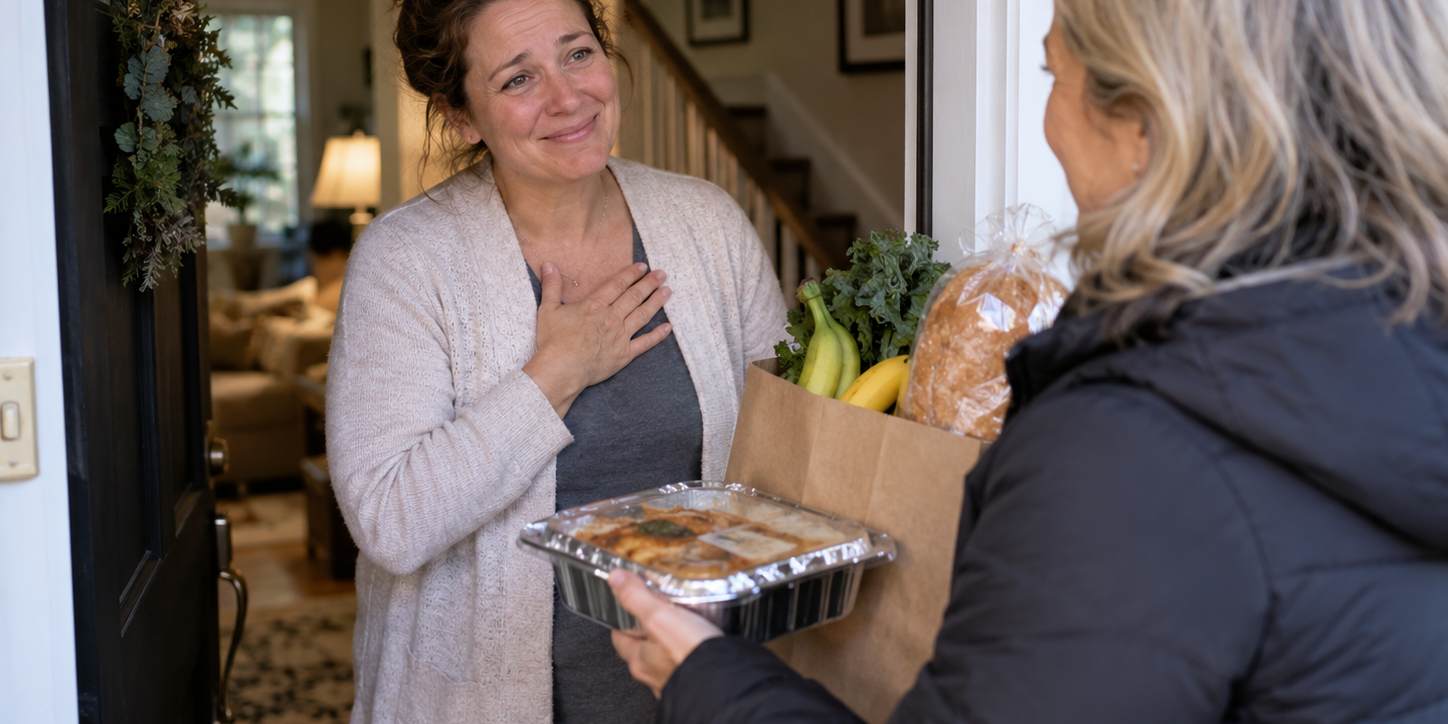
If You Really Want to Help, Don’t Make Them Manage the Helpers
One helpful friend is wonderful. Five helpful relatives can still become five people the caregiver has to coordinate.
If several of you want to help, try dividing the responsibility before everyone starts sending separate versions of “What do you need?” Maybe one sibling handles rides to appointments. Another takes care of groceries. Someone else keeps relatives updated, so the caregiver does not have to repeat the same medical news six times.
The National Institute on Aging recommends deciding who will be responsible for specific caregiving tasks, including meals, housekeeping, bills, medical communication and respite.
The exact departments will look different in every family. What matters is that someone owns them.
“Everybody will pitch in” sounds supportive.
“Marcus handles Wednesday groceries” is a plan.
And once you agree to carry something, carry it consistently. Do not make the caregiver remind you every week that Wednesday still exists.
The best support system is not necessarily the one with the most people. It is the one that leaves the caregiver with fewer things to remember.
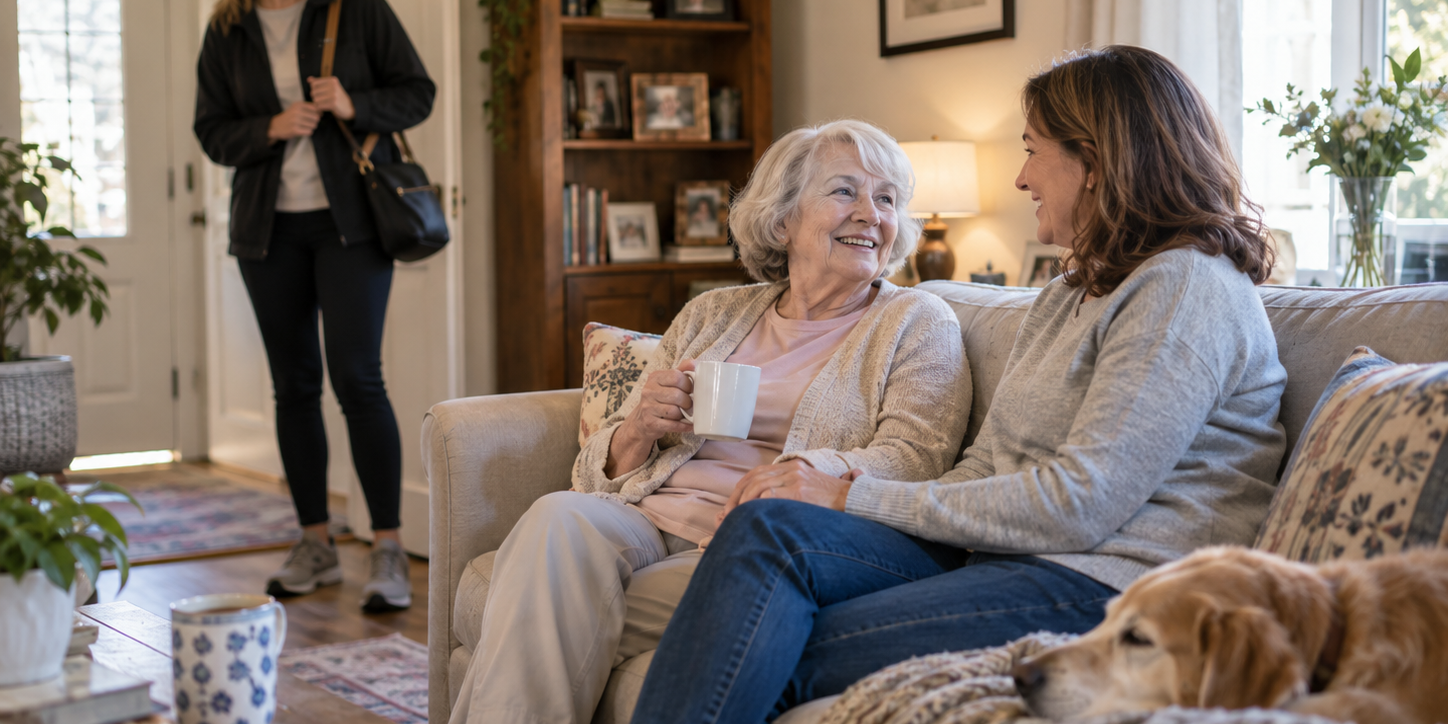
Don’t Just Offer Help. Carry Something.
The next time “Let me know if you need anything” is about to leave your mouth, you do not need to swallow the kindness behind it.
Just finish the thought.
“I’m free Saturday morning. Can I bring groceries?”
“I can handle dinner Tuesday. Would that help?”
Learning what to say to a caregiver is really about making your care easier to receive: notice something, offer something specific, get permission, then follow through.
If you want to understand why practical support matters so much, read our deeper look at Dolly Parton, Carl Dean and the side of caregiving we don’t talk about enough.
The goal is not to find the perfect words.
It is to make sure your kindness becomes something they can actually feel.
Non Medical Disclaimer
The information provided in this article is for educational purposes only and is not intended as a substitute for professional medical advice, diagnosis, or treatment. Always seek the advice of your physician or other qualified health provider with any questions you may have regarding a medical condition. Never disregard professional medical advice or delay in seeking it because of something you have read in this article.
Related Posts
Caregiver Decision Fatigue: When You Finally Get a Break and Don’t Know What to Do With Yourself
For months, you’ve wished for a break as a family caregiver. Then it finally comes, and instead of feeling free, you feel blank. You can’t decide where to go, what to eat, or even what you enjoy…

Dolly Parton, Carl Dean and the Side of Caregiving We Don’t Talk About Enough
Dolly Parton spent a lifetime caring for the people she loved while continuing to show up for her music, her work, and the people who counted on her. But near the end of her life, she shared…

Remote Patient Monitoring: The Home Care Technology That’s Quietly Changing Everything
There's a particular kind of math you do without meaning to. The last time you talked to your parent. Whether anything in their voice was off. Whether the two days since then mean nothing, or mean…