
1. Signs Your Aging Parent May Need Help at Home
2. How to Tell Which Daily Activities Your Aging Parent Needs Help With
3. How Often Does My Aging Parent Need Help at Home?
4. Is It Still Safe for My Aging Parent to Live Alone?
5. My Parent Refuses a Caregiver: 7 Ways to Introduce Help Without Taking Away Independence
6. How to Talk to an Aging Parent About Getting Help at Home
7. What Kind of Help Does My Aging Parent Need at Home?
8. When Is Family Caregiving No Longer Enough? How to Know When to Add Professional Home Care
Quick Answer
Your aging parent may need more help at home if you begin noticing changes in mobility, personal hygiene, meals, household upkeep, memory, transportation, social activity, or their ability to manage everyday routines safely and consistently.
One unusual day does not necessarily mean a parent can no longer live independently. What matters more is a pattern of changes, increasing difficulty, or a new safety concern. The goal is not to take independence away. It is to identify where support could help your parent remain safe, comfortable, connected, and as independent as possible.
Sometimes, the First Sign Is Simply That Something Feels Different
You visit your mother and notice several unopened envelopes sitting where she normally sorts her mail. Your father, who used to cook most evenings, has started saying he “wasn’t hungry” whenever you ask what he ate.
The house isn’t dirty exactly, but laundry is beginning to pile up. There is less food in the refrigerator. Your parent seems more tired on the stairs. Perhaps you are getting more calls asking for help with things they previously handled without thinking.
None of these observations, by themselves, tells you exactly what is happening. Aging also does not automatically mean losing independence. Many older adults continue living safely in their own homes for years. The National Institute on Aging describes aging in place as remaining at home while planning for the assistance that may eventually be needed with personal care, household tasks, meals, transportation, safety, and other parts of everyday life.
The useful question is not simply, “Is my parent too old to live alone?” A better question is, “Has anything changed in their ability to live the way they want to, safely, consistently, and comfortably?” The signs below can help you begin answering that question.

Expert tips
Don’t ask only, “Can Mom still do this?” Look at four things: ability, safety, consistency, and effort. A task may technically still be possible while becoming unsafe, exhausting, or unreliable enough that your parent begins avoiding it.
7 Signs Your Aging Parent May Need More Help at Home
1. Physical Changes and Mobility Problems
Physical changes are often among the easiest signs for families to notice, but they can develop slowly enough that everyone adjusts without realizing how much has changed.
You may notice that your parent walks more slowly or cautiously, holds onto furniture while moving around the home, struggles to get out of a chair or bed, avoids stairs, becomes unusually tired after ordinary activities, or seems less steady when turning or walking. Unexplained bruises, recent falls, and near-falls also deserve attention.
According to the Centers for Disease Control and Prevention, more than one in four adults age 65 and older reports falling each year. Falls are also the leading cause of injury among adults in this age group. A parent does not need to suffer a major injury before you begin thinking about safety.
Sometimes the warning comes earlier. Your parent might say, “I don’t really use the upstairs anymore,” “I wait until your brother comes before I take the trash outside,” or “I almost slipped getting out of the shower.” Statements like these may show that your parent has already begun reorganizing everyday life around activities that have become difficult.
Ask four questions:
Can they do it?
Can they do it safely?
Can they do it consistently?
How much effort does it require?
A parent may technically still be able to climb the stairs while doing so with enough difficulty that the activity is no longer reliably safe.
2. Changes in Personal Hygiene and Self-Care
Changes in grooming or hygiene can be easy to misinterpret because your parent may insist everything is fine even while bathing, dressing, or grooming has quietly become more difficult.
Look for wearing the same clothing repeatedly, bathing less often, changes in oral hygiene, difficulty shaving or grooming, clothing that is inappropriate for the weather, difficulty managing buttons or shoes, or avoiding the shower because getting in and out feels unsafe.
Bathing, dressing, grooming, toileting, eating, and moving around are examples of activities of daily living. Needing help with one part of a routine does not automatically mean your parent needs someone to take over the entire task.
Your mother may still be perfectly capable of bathing herself, for example, but need assistance getting into or out of the shower safely. The goal is to support what has become difficult while preserving what your parent can still do independently.
3. Changes Around the Home, Meals, and Everyday Routines
Sometimes your parent appears relatively unchanged, but their home begins telling a different story. Pay attention to changes from what is normal for them.
Dishes may begin accumulating in the sink. Laundry may go unwashed. Trash may pile up. You might notice expired food, an unusually empty refrigerator, unopened mail, overdue bills, neglected repairs, or rooms your parent has stopped using.
The issue is not whether the home looks perfect. The more useful question is whether there has been a meaningful change in your parent’s ability to keep their environment safe and functional.
Meals deserve similar attention. Ask yourself, “Is my parent still eating reliably when nobody is here?” Skipped meals, little fresh food, unexplained weight change, expired groceries, or a parent who used to cook regularly but now says preparing food is “too much trouble” can all signal that something has changed.
The difficulty may not be eating itself. It may be grocery shopping, standing long enough to cook, carrying food, opening containers, cleaning afterward, or remembering meal times. Identifying the exact task that has become difficult makes choosing the right kind of support much easier.
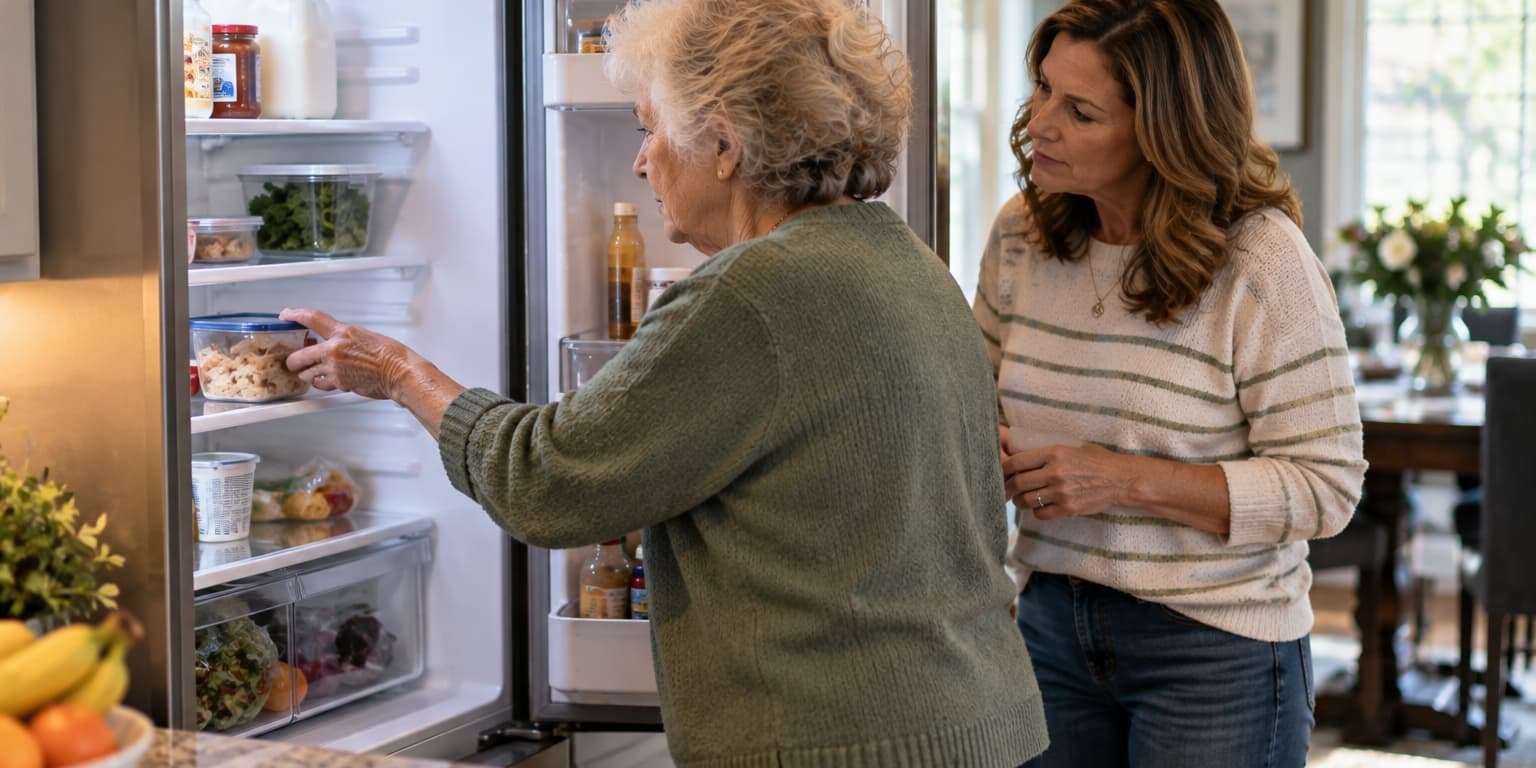
FACT CHECK
Falls Are Common Among Older Adults
More than one in four adults age 65 and older reports falling each year, according to the Centers for Disease Control and Prevention. Falls are also the leading cause of injury among older adults.
Memory, Planning, and Judgment Changes
4. Memory or Thinking Changes That Affect Daily Life
Occasionally forgetting a name or appointment is not the same as a persistent change that begins interfering with everyday life.
Pay closer attention if your parent repeatedly misses appointments, asks the same questions, becomes confused about familiar routines, struggles to follow a familiar recipe, has increasing difficulty managing bills, repeatedly loses important items, gets lost in familiar places, or begins showing noticeably poorer judgment.
The Alzheimer’s Association lists memory loss that disrupts daily life, difficulty planning or solving problems, trouble completing familiar tasks, confusion, and changes in judgment among warning signs that deserve attention.
These changes do not automatically mean your parent has Alzheimer’s disease or another form of dementia. Memory, concentration, and behavior can change for many reasons. If a change is new, worsening, significant, or interfering with daily life, encourage your parent to discuss it with an appropriate healthcare professional.
One of the most useful things you can do is document what you actually observe.
Instead of saying, “Mom’s memory is getting terrible,” write something specific such as, “Mom missed two appointments this month and asked me several times yesterday what day her next appointment was.”
Specific observations are more useful when speaking with your parent, other family members, or a healthcare professional. They also make it easier to determine whether something is an isolated event or a developing pattern.

Other Changes Worth Paying Attention To
5. Social and Emotional Changes
Independence is about more than bathing, cooking, and keeping a house clean. Pay attention to whether your parent is still participating in the people, activities, and routines that matter to them.
Perhaps they have stopped seeing friends, attending church or community activities, enjoying a longtime hobby, answering calls, or leaving the house as often as before. They may also seem more withdrawn, fearful, irritable, or isolated.
Sometimes what looks like a loss of interest has a practical cause. Dad may not have stopped attending his weekly gathering because he no longer enjoys it. He may simply feel uncomfortable driving after dark. Mom may still want to see friends, but getting ready, walking longer distances, or arranging transportation may have become difficult.
Understanding why participation changed helps you address the real barrier.
6. Driving and Transportation Changes
Driving often represents independence, which can make changes in driving ability difficult for families to discuss.
Instead of beginning with, “You shouldn’t be driving anymore,” start by observing. You may notice new dents or scratches on the vehicle, getting lost on familiar routes, increasing anxiety while driving, avoiding certain roads or times of day, recent near-misses, or increasing dependence on relatives for transportation.
If driving becomes difficult, don’t stop the assessment at driving itself. Ask how your parent will continue getting to medical appointments, grocery stores, religious services, social activities, and other important parts of everyday life.
Sometimes transportation assistance can help preserve independence rather than reduce it.
7. The Family Is Quietly Doing More and More
One of the easiest signs to overlook is that your family may already be compensating for changes in your parent’s independence.
Perhaps you now order Mom’s groceries every week. Your sister manages Dad’s appointments. A neighbor takes the trash outside. Your brother provides most of the transportation. Someone prepares meals every weekend. Or family visits increasingly revolve around laundry, cleaning, errands, and household tasks.
Because these responsibilities build gradually, families do not always think of them as caregiving.
Ask one revealing question: “If everyone helping my parent became unavailable for two weeks, what would immediately stop working?”
The answer may reveal care needs that the family’s routine has been hiding. This does not mean those tasks must immediately be handed over to a professional caregiver. Family members, friends, neighbors, community programs, and paid support can all be part of an aging-in-place plan.
What matters is understanding what support already exists and whether that support is safe, reliable, and sustainable.
When Several Small Changes Start to Add Up
Families sometimes wait for one dramatic event such as a serious fall, hospitalization, car accident, or major household mistake before deciding that something needs to change.
But care needs often develop gradually. Missed meals, increasing clutter, difficulty driving, and one family member taking on more responsibilities every week may tell you more together than any one concern would alone.
That is why the next step is not necessarily to hire a caregiver. The next step is to identify which daily activities have actually become difficult and determine what kind of support would help.
The next guide in this series is: How to Tell Which Daily Activities Your Aging Parent Needs Help With.
“The goal isn't to take independence away. It's to add enough support to make independence safer and more sustainable.”
Frequently Asked Questions About Signs Your Aging Parent May Need Help at Home
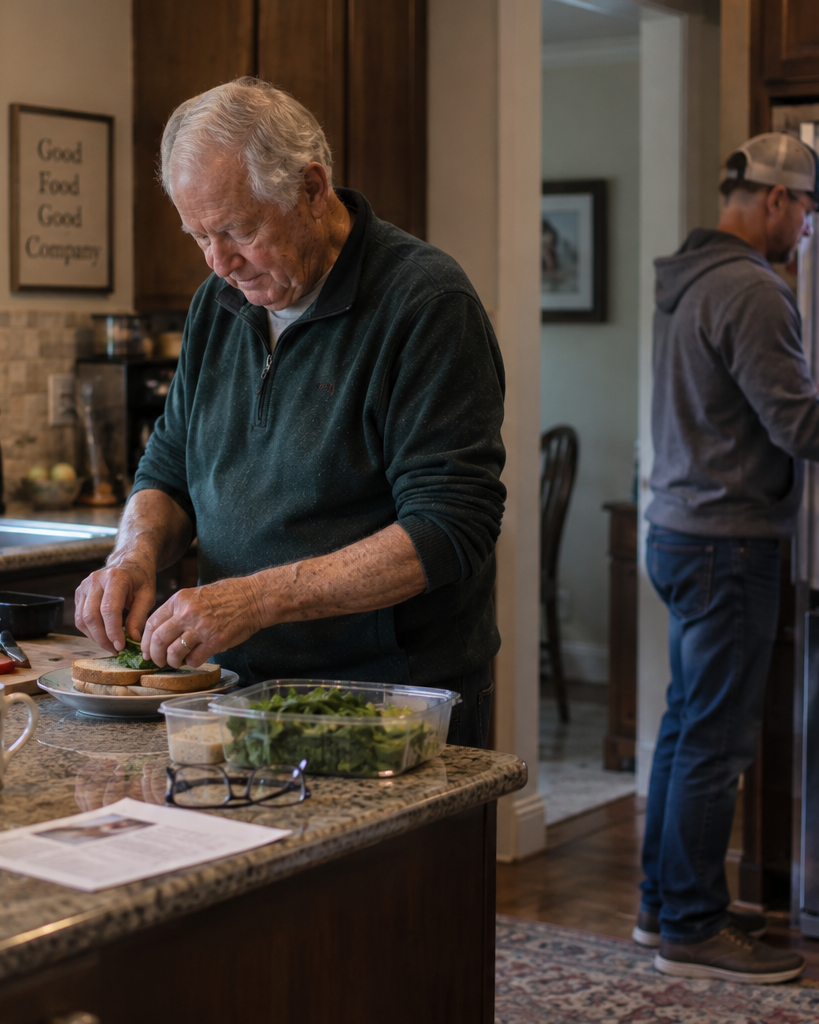
A family member checking in with an aging parent at home.
Early signs can include changes in mobility, meals, personal hygiene, household upkeep, transportation, memory, social participation, or increasing dependence on relatives for tasks that were previously handled independently.
Look particularly for changes from your parent’s normal routine. One isolated incident may not mean much, but several changes occurring together, or any change affecting safety, deserve closer attention.
No. Independence is not all-or-nothing.
An older adult may need assistance with groceries, transportation, housekeeping, bathing, or another specific task while continuing to manage many other parts of life independently. Support can sometimes make remaining at home safer and more sustainable.
No. Forgetfulness by itself does not establish dementia.
What deserves more attention is a new or worsening pattern of memory, thinking, or judgment problems that begins interfering with everyday life. Families should focus on observing and documenting changes rather than trying to diagnose the cause themselves.
Significant or worsening concerns should be discussed with an appropriate healthcare professional.
Not necessarily.
Some older adults may minimize difficulties because they value privacy and independence or do not want to worry their family. Instead of announcing that your parent needs care, begin with something specific you have noticed. For example: “I’ve noticed the stairs seem harder lately. How have they been feeling for you?” That invites your parent into the conversation rather than making the decision for them.
Assess individual daily activities rather than asking whether your parent generally “needs help.” Look at personal-care tasks such as bathing, dressing, eating, toileting, grooming, and mobility, as well as more complex activities such as cooking, shopping, housekeeping, laundry, transportation, appointments, and household organization. The next article in this series explains how to assess these activities in detail.
Professional non-medical home support may be worth exploring when daily tasks are no longer being completed safely or consistently, one family caregiver is becoming overwhelmed, relatives live too far away to provide dependable help, or your parent would benefit from regular assistance with personal care, meals, transportation, housekeeping, companionship, or respite. The appropriate level of help depends on your parent’s actual needs, preferences, safety, and the support system already around them.
Non Medical Disclaimer
The information provided in this article is for educational purposes only and is not intended as a substitute for professional medical advice, diagnosis, or treatment. Always seek the advice of your physician or another qualified healthcare provider with questions regarding a medical condition or significant changes in your loved one’s physical health, memory, behavior, or daily functioning. Never disregard professional medical advice or delay seeking it because of something you have read in this article.
Related Posts

How Much Help Does My Aging Parent Need? A Practical Guide to Assessing Care at Home
Not sure how much help your aging parent may need? This practical guide helps families recognize changes, assess everyday support needs, consider safety and family capacity, and understand when…

Is It Still Safe for My Aging Parent to Live Alone?
Living alone should be evaluated by how safely and consistently an older adult manages everyday life, not by age alone.

What Kind of Help Can an Older Adult Receive at Home?
A practical guide to matching the difficulties your aging parent is experiencing with the type of help that may make daily life safer, easier, and more sustainable.