
1. Signs Your Aging Parent May Need Help at Home
2. How to Tell Which Daily Activities Your Aging Parent Needs Help With
3. How Often Does My Aging Parent Need Help at Home?
4. Is It Still Safe for My Aging Parent to Live Alone?
5. My Parent Refuses a Caregiver: 7 Ways to Introduce Help Without Taking Away Independence
6. How to Talk to an Aging Parent About Getting Help at Home
7. What Kind of Help Does My Aging Parent Need at Home?
8. When Is Family Caregiving No Longer Enough? How to Know When to Add Professional Home Care
Quick Answer
To understand which daily activities your aging parent needs help with, review each task individually. Ask whether they can complete it, whether they can do it safely, whether it happens consistently, and how much effort it requires. A parent may remain independent in many areas while needing support with only a few specific routines.
Instead of Asking “Does Mom Need Help?”, Ask What Has Become Difficult
Families often reach a point where they know something has changed but still struggle to describe exactly what kind of help their parent needs.
Perhaps your mother still lives alone, cooks some meals, dresses herself, and manages her normal morning routine. At the same time, you have started buying groceries, driving her to appointments, carrying laundry downstairs, and calling each evening to make sure she ate.
Is she independent or does she need help? In reality, both can be true.
Independence is not an all-or-nothing condition. An older adult may manage many parts of daily life independently while needing support with a few activities that have become difficult, unsafe, exhausting, or inconsistent.
Expert tips
Do not judge a daily activity only by whether your parent can technically complete it. Look at four things: ability, safety, consistency, and effort. A parent may still be able to dress, cook, or climb stairs, but the task may now take much longer, cause significant fatigue, or only happen when someone else quietly helps.
Use Four Questions for Every Activity
Use Four Questions for Every Activity
For each activity, consider:
Ability: Can your parent do it?
Safety: Can they complete it without unnecessary risk?
Consistency: Does it happen reliably?
Effort: Is it becoming so tiring or difficult that they avoid it?
This gives you a much clearer picture than simply asking whether your parent is “independent.”
1. Personal Care Activities
Review:
- bathing;
- dressing;
- grooming;
- toileting;
- eating;
- moving around the home.
Look at the specific part of the activity that has become difficult.
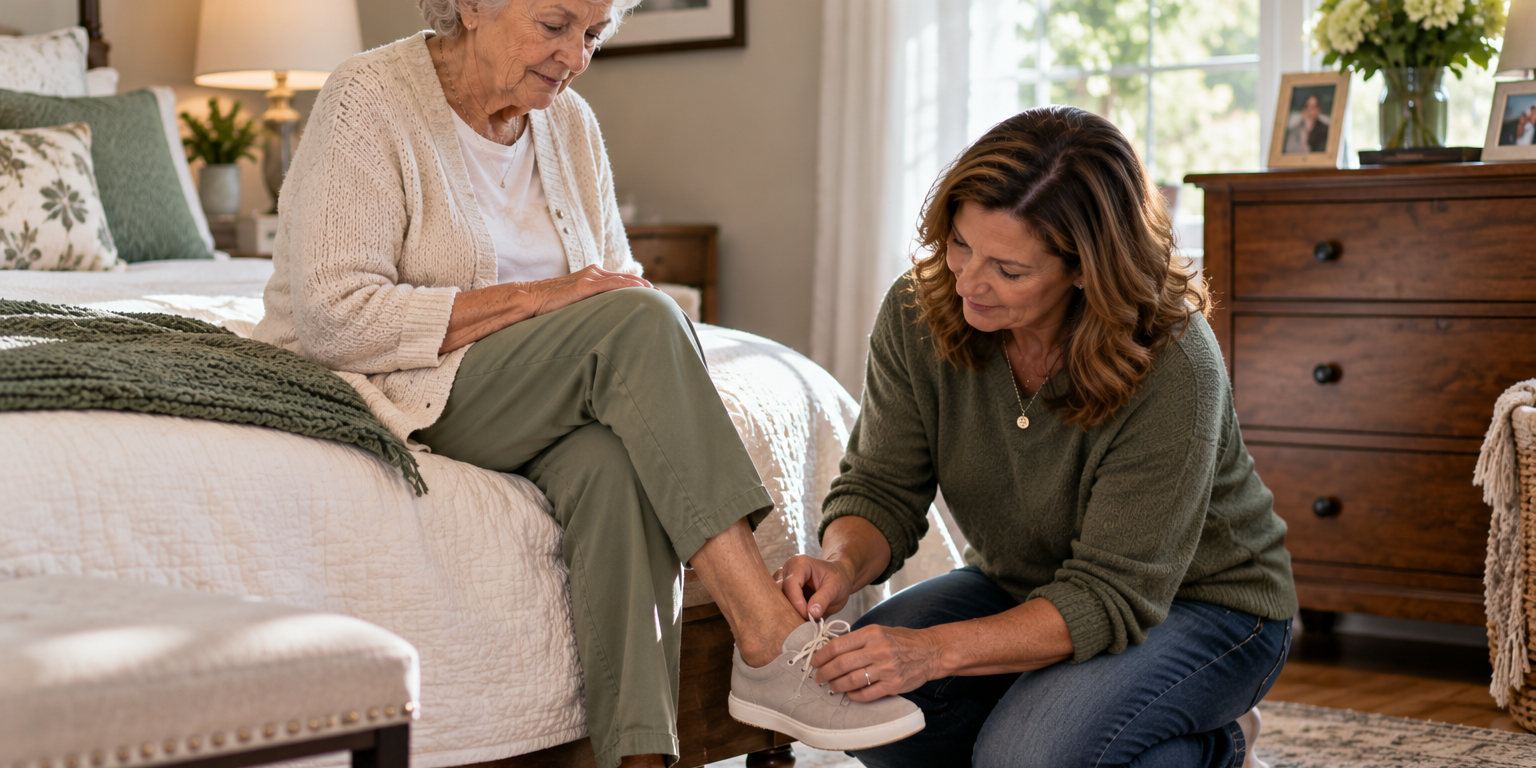
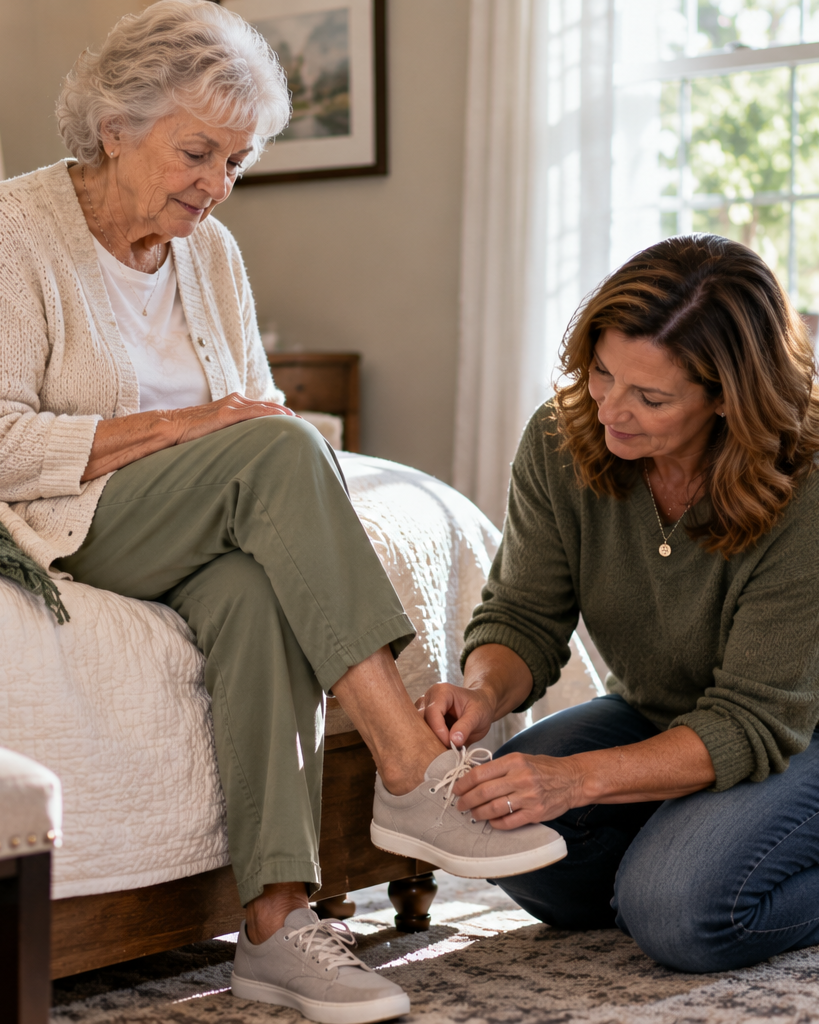
For example, your parent may be able to bathe independently but need help getting safely into and out of the shower. They may dress themselves but struggle with socks, shoes, or buttons.
Support does not have to replace the whole activity.
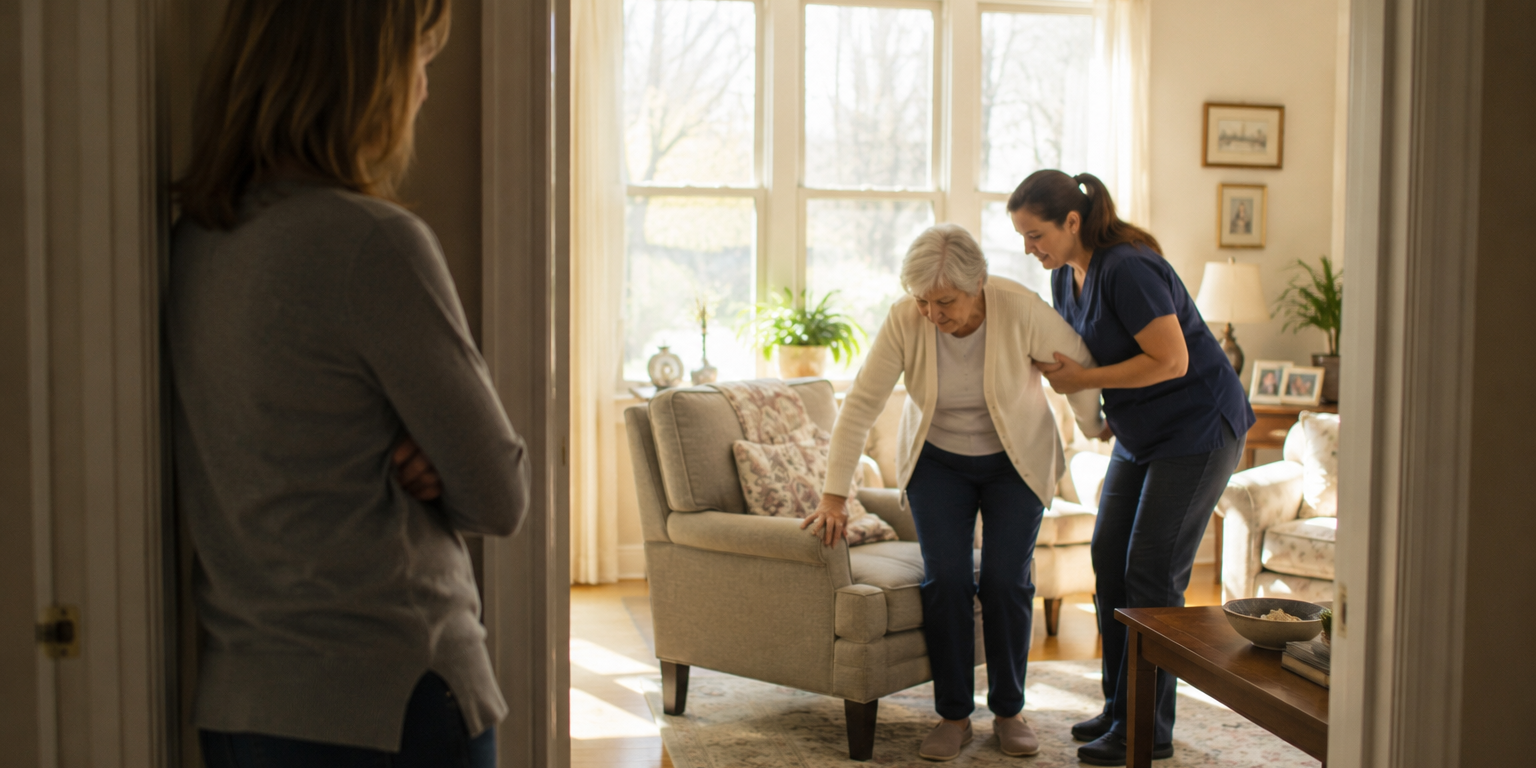
2. Mobility and Transfers
Look at:
- getting out of bed;
- standing from a chair;
- walking through the home;
- using stairs;
- getting into or out of a vehicle;
- using an established mobility aid.
Notice whether your parent has begun avoiding certain rooms or activities because moving has become difficult.
FACT CHECK
What Counts as an Activity of Daily Living?
Activities of daily living, often called ADLs, include basic self-care tasks such as bathing, dressing, grooming, toileting, eating, and moving around. These activities are commonly used when assessing how independently an older adult can manage everyday personal care.
3. Meals and Hydration
Ask whether your parent can:
- obtain groceries;
- prepare meals;
- carry food safely;
- open containers;
- eat regularly;
- keep drinks accessible.
A person can be perfectly capable of eating while still needing help with the steps required to make food available.

4. Household Tasks
Review:
- cleaning;
- laundry;
- changing bedding;
- taking out trash;
- basic home organization;
- keeping essential areas safe and usable.
Do not judge the home against your own standard. Look for meaningful changes from what is normal for your parent.
5. Transportation and Errands
Can your parent reliably reach:
- medical appointments;
- grocery stores;
- pharmacy or essential errands;
- church or community activities;
- social visits?
Losing access to transportation can affect far more than convenience.
6. Social Connection and Everyday Participation
Ask whether your parent is still able to participate in routines and relationships they value.
If they have stopped going somewhere or doing something, find out why.
The barrier may be mobility, transportation, fatigue, difficulty getting ready, vision, hearing, or another practical challenge.
Who Is Currently Making Each Activity Possible?
One of the most important parts of assessing daily activities is identifying who currently makes each activity possible.
A parent may appear completely independent because someone else has quietly removed the difficult parts of daily life.
Perhaps you order groceries every week. Your sister schedules appointments. A neighbor takes the trash out. Your spouse prepares meals on Sundays.
Write those activities down too.
Then ask: Could my parent still complete this activity if the person helping them was unavailable?
This does not mean family support should stop. The purpose is to understand the actual support system.
Look for Patterns, Not Perfection
One difficult day does not necessarily mean a new care plan is required.
Look for:
- repeated difficulty;
- declining safety;
- tasks that are regularly skipped;
- increasing exhaustion;
- activities that happen only because someone else steps in.
Also consider whether the change is new or worsening. Sudden changes in physical ability, thinking, behavior, or daily functioning may require prompt attention from an appropriate healthcare professional.
Once you know which activities need support, the next question becomes how frequently that support is needed.
Next guide: How Often Does My Aging Parent Need Help at Home?
Frequently Asked Questions About Signs Your Aging Parent May Need Help at Home
They generally refer to basic personal-care activities such as bathing, dressing, grooming, toileting, eating, and mobility.
Time and effort matter. A task can still be technically possible while becoming exhausting, unsafe, or unreliable.
Yes. Family support is part of the real care system and should be included when assessing needs.
Not automatically. The purpose of the assessment is to identify the gap first. The solution can involve family, community resources, environmental adjustments, professional support, or a combination.
Assess individual daily activities rather than asking whether your parent generally “needs help.” Look at personal-care tasks such as bathing, dressing, eating, toileting, grooming, and mobility, as well as more complex activities such as cooking, shopping, housekeeping, laundry, transportation, appointments, and household organization. The next article in this series explains how to assess these activities in detail.
Professional non-medical home support may be worth exploring when daily tasks are no longer being completed safely or consistently, one family caregiver is becoming overwhelmed, relatives live too far away to provide dependable help, or your parent would benefit from regular assistance with personal care, meals, transportation, housekeeping, companionship, or respite. The appropriate level of help depends on your parent’s actual needs, preferences, safety, and the support system already around them.
Non Medical Disclaimer
The information provided in this article is for educational purposes only and is not intended as a substitute for professional medical advice, diagnosis, or treatment. Always seek the advice of your physician or another qualified healthcare provider with questions regarding a medical condition or significant changes in your loved one’s physical health, memory, behavior, or daily functioning. Never disregard professional medical advice or delay seeking it because of something you have read in this article.
Related Posts

How Much Help Does My Aging Parent Need? A Practical Guide to Assessing Care at Home
Not sure how much help your aging parent may need? This practical guide helps families recognize changes, assess everyday support needs, consider safety and family capacity, and understand when…
Is It Still Safe for My Aging Parent to Live Alone?
Living alone should be evaluated by how safely and consistently an older adult manages everyday life, not by age alone.

What Kind of Help Can an Older Adult Receive at Home?
A practical guide to matching the difficulties your aging parent is experiencing with the type of help that may make daily life safer, easier, and more sustainable.