
1. Signs Your Aging Parent May Need Help at Home
2. How to Tell Which Daily Activities Your Aging Parent Needs Help With
3. How Often Does My Aging Parent Need Help at Home?
4. Is It Still Safe for My Aging Parent to Live Alone?
5. My Parent Refuses a Caregiver: 7 Ways to Introduce Help Without Taking Away Independence
6. How to Talk to an Aging Parent About Getting Help at Home
7. What Kind of Help Does My Aging Parent Need at Home?
8. When Is Family Caregiving No Longer Enough? How to Know When to Add Professional Home Care
Quick Answer
There is no universal number of hours an aging parent needs. Start by identifying the tasks that require help, how often those tasks occur, when they happen, how long they generally take, and what reliable family or community support already exists.
Do Not Start With a Number of Hours
Families often ask, “How many hours of care does my parent need?” It sounds like the practical question, but it is usually the wrong place to begin. A parent who needs help with groceries once a week has a very different pattern of need from someone who needs assistance getting dressed every morning. Another person may need help at two specific times each day while managing the rest independently.
The schedule should come from the routine.

Expert tips
Build the schedule from your parent’s actual routines, not from a target number of care hours. Write down which tasks need help, when they happen, who currently handles them, and what happens when that person is unavailable. A one-week map often reveals the real frequency of support much more clearly.
Start With the Activities That Need Support
Before estimating time, list the tasks your parent needs help completing.
These may include:
- bathing or dressing;
- mobility;
- meal preparation;
- grocery shopping;
- transportation;
- laundry and housekeeping;
- companionship;
- errands;
- respite for a family caregiver.
Then write down how often each activity occurs.
This is where the previous guide, How to Tell Which Daily Activities Your Aging Parent Needs Help With, becomes useful.
What Different Levels of Support Might Look Like
Occasional or Scheduled Help
This may fit someone who manages most personal routines independently but needs help with scheduled activities such as errands, transportation, laundry, heavier housekeeping, companionship, or grocery shopping.
Help Several Times Each Week
More frequent visits may make sense when several routines need regular support, but not necessarily every day.
Daily Support
Daily help may be useful when an important activity reliably needs attention each day, such as dressing, grooming, meals, or mobility.
Daily support does not automatically mean all-day care.

FACT CHECK
Support Needs Can Vary Widely
There is no universal home-care schedule for older adults. Support may range from occasional help with errands or household tasks to assistance with personal-care routines each day or more extensive support, depending on the person’s needs and available family or community help.
Support at Multiple Times During the Day
Support at Multiple Times During the Day
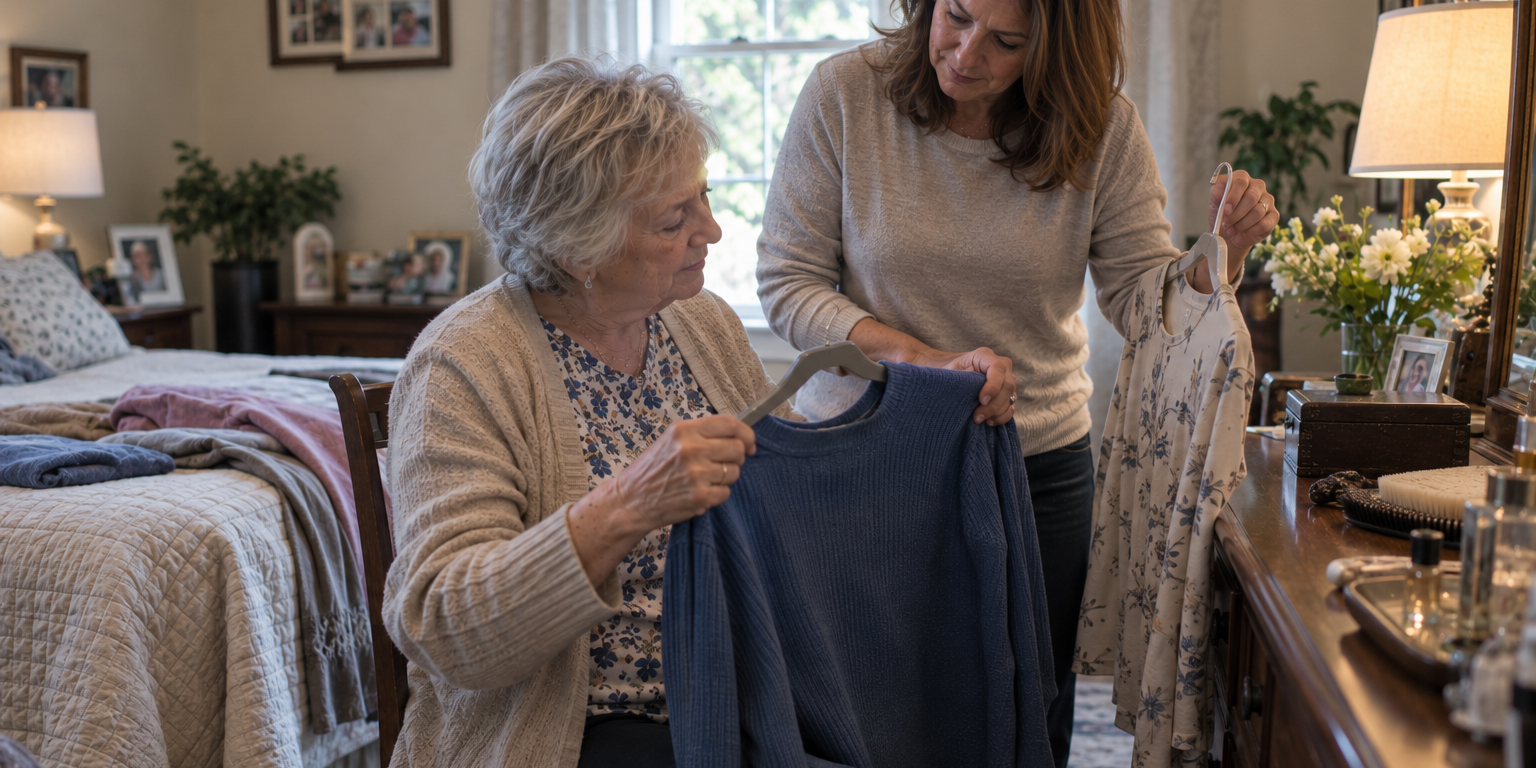
Some needs happen at different points in the day. Morning help may be needed for getting ready, while another period of support is useful around meals or an evening routine.
When Needs Become More Continuous
Some situations involve frequent or unpredictable needs that scheduled visits alone may not safely address. Significant safety, mobility, or cognitive changes should be discussed with appropriate healthcare professionals.
Build a One-Week Support Map
For one ordinary week, record:
- What your parent needed help with.
- When it happened.
- Who provided the help.
- Roughly how long it took.
- What would have happened if nobody was available.
Do not aim for minute-by-minute precision. Look for the rhythm of the week.
The exercise often reveals two things: how much support is already happening, and where the gaps are.
Estimate Time After You Understand the Tasks
Once the weekly pattern is visible, estimate how much time each support period realistically requires.
Include preparation, transitions, travel, conversation, and ordinary delays.
Helping someone attend an appointment, for example, may involve getting ready, transportation, waiting, returning home, and settling back in, not simply the drive.
Separate Predictable Needs From Unpredictable Needs
Scheduled activities such as housekeeping or grocery shopping are easier to plan.
Other needs can be less predictable.
If your parent sometimes requires unexpected assistance, ask who is available to respond and whether that arrangement is dependable.
Routine non-medical home care should not be treated as a replacement for emergency or medical services.
Include the Family's Real Capacity
A plan that works only because one daughter constantly rearranges work or one son drives across town whenever something happens may not be sustainable.
Ask:
- Who is providing help now?
- Which commitments are reliable?
- Who is becoming stretched?
- What happens when someone is sick, traveling, or unavailable?
Professional support can fill particular gaps while family remains involved.
How to Know When the Current Schedule Is No Longer Enough
Reassess when:
- important tasks are repeatedly missed;
- your parent struggles during periods without help;
- new safety concerns appear;
- family members keep adding unscheduled visits;
- the current arrangement is becoming exhausting;
- abilities, routines, or health change.
Care needs often increase gradually. A schedule should adapt as the person’s life changes.
Frequency Is Only One Part of the Decision
Knowing how often help is needed does not answer every question about whether the overall living situation is safe.
A parent may need only a few scheduled tasks but still have a serious safety concern. Another may need frequent support while remaining comfortable at home because a dependable system has been built.
Next guide: Is It Still Safe for My Aging Parent to Live Alone?
Frequently Asked Questions About Signs Your Aging Parent May Need Help at Home

There is no universal number. Build the schedule from the activities that require support and when they occur.
No. Someone may need help every day but only during one part of the routine.
Yes, if family commitments are dependable and sustainable.
Review the schedule whenever there is a meaningful change in ability, safety, routine, health, living situation, or family availability.
Professional non-medical home support may be worth exploring when daily tasks are no longer being completed safely or consistently, one family caregiver is becoming overwhelmed, relatives live too far away to provide dependable help, or your parent would benefit from regular assistance with personal care, meals, transportation, housekeeping, companionship, or respite. The appropriate level of help depends on your parent’s actual needs, preferences, safety, and the support system already around them.
Non Medical Disclaimer
The information provided in this article is for educational purposes only and is not intended as a substitute for professional medical advice, diagnosis, or treatment. Always seek the advice of your physician or another qualified healthcare provider with questions regarding a medical condition or significant changes in your loved one’s physical health, memory, behavior, or daily functioning. Never disregard professional medical advice or delay seeking it because of something you have read in this article.
Related Posts

How Much Help Does My Aging Parent Need? A Practical Guide to Assessing Care at Home
Not sure how much help your aging parent may need? This practical guide helps families recognize changes, assess everyday support needs, consider safety and family capacity, and understand when…

Is It Still Safe for My Aging Parent to Live Alone?
Living alone should be evaluated by how safely and consistently an older adult manages everyday life, not by age alone.

What Kind of Help Can an Older Adult Receive at Home?
A practical guide to matching the difficulties your aging parent is experiencing with the type of help that may make daily life safer, easier, and more sustainable.